For a one-hour drinks reception followed by a meal, plan on 6 to 8 canapés per person. For a standing reception that replaces dinner (what the French call a cocktail dînatoire), plan on 15 to 20. Anything in between depends on the start time and on what your guests will eat afterwards.
These are working figures from the trade, not a rule. The sections below show how to adjust them to your own event. In France, canapés are counted as pièces, "pieces", and quotes are written that way: a line per item, a number per guest.
Three questions that set the quantity
What time does it start?
A reception at 11.30am does not need the same quantity as one at 7pm. Around mealtimes, guests arrive hungry and eat fast for the first forty minutes. At 5pm, after lunch, they graze slowly. Bear in mind that people in the south of France dine late: a wedding dinner at 9pm is normal here.
How long does it last?
Over a two-hour reception, half the canapés go in the first 45 minutes. That is why a caterer sends trays out in waves rather than putting everything on the table at the start.
What comes next?
A vin d'honneur (the drinks reception after a French wedding ceremony) stays light: guests will sit down afterwards for a starter, main course and dessert. A drinks reception at the end of a company seminar, at 6pm, often doubles as dinner for people about to drive home to Sète, Lunel or Béziers.
The reference table
| Format | Length | Savoury canapés | Sweet canapés | Total per person |
|---|---|---|---|---|
| Drinks before a meal | 1 hr | 6 to 8 | 0 | 6 to 8 |
| Wedding drinks reception (vin d'honneur) | 1.5 to 2 hrs | 8 to 10 | 0 to 2 | 8 to 12 |
| Late-afternoon reception | 2 hrs | 10 to 12 | 2 to 3 | 12 to 15 |
| Standing dinner (cocktail dînatoire) | 2.5 to 3 hrs | 12 to 15 | 3 to 5 | 15 to 20 |
The last format has its own page: standing dinner reception.
Cold, hot and sweet: the split
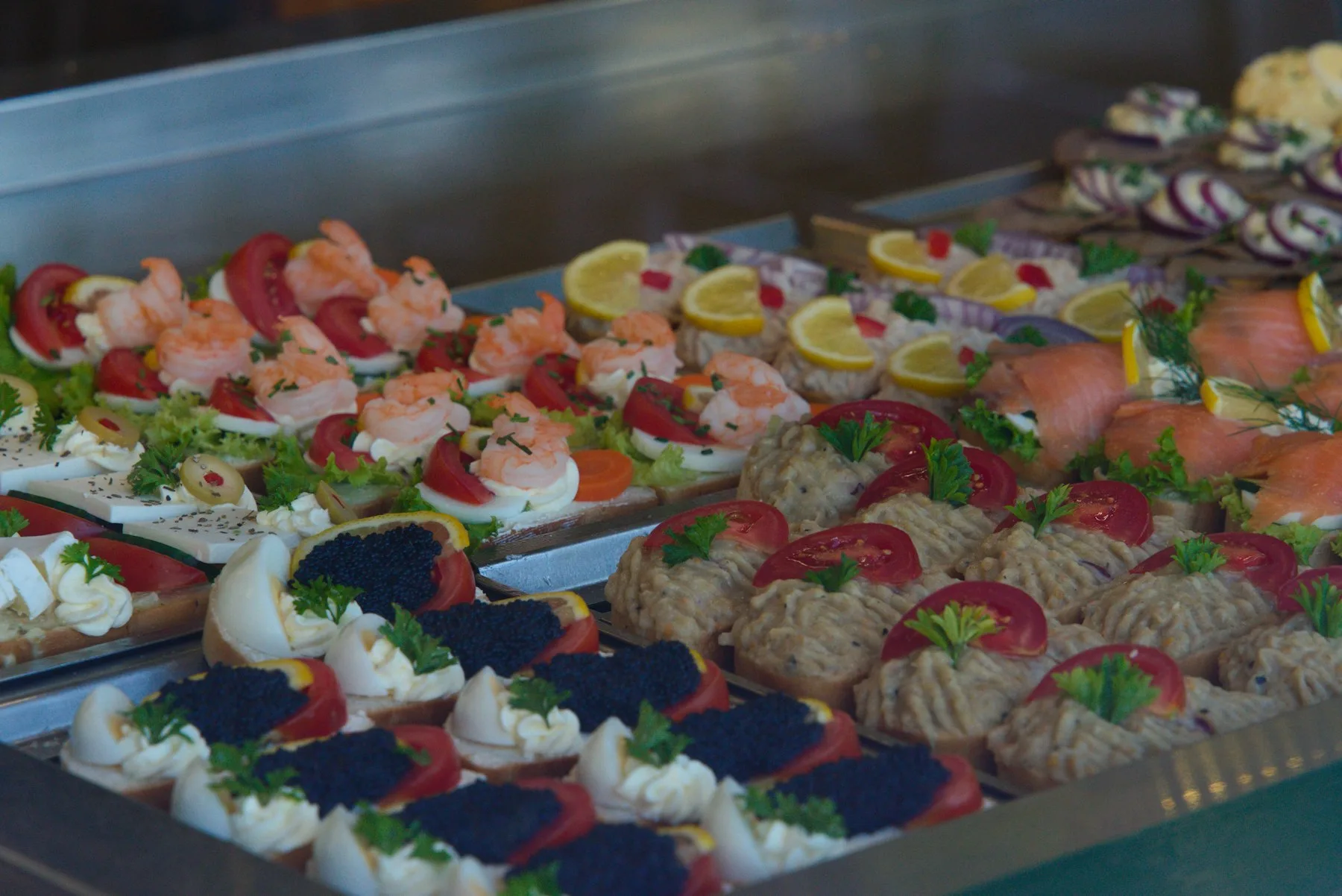
Out of 18 canapés, a common split is 8 to 10 cold, 4 to 5 hot and 3 to 4 sweet. Hot canapés bring an extra constraint. Under French food hygiene rules, a dish served hot must be held at 63 °C (145 °F) or above until it is served, so the venue needs an oven, a hot cabinet or heated boxes on site.
Cold canapés follow the opposite rule: anything prepared in advance is kept at 3 °C (37 °F) or below. In a room without a cold store, that means refrigerated boxes or small trays sent out a few at a time.
What moves the number
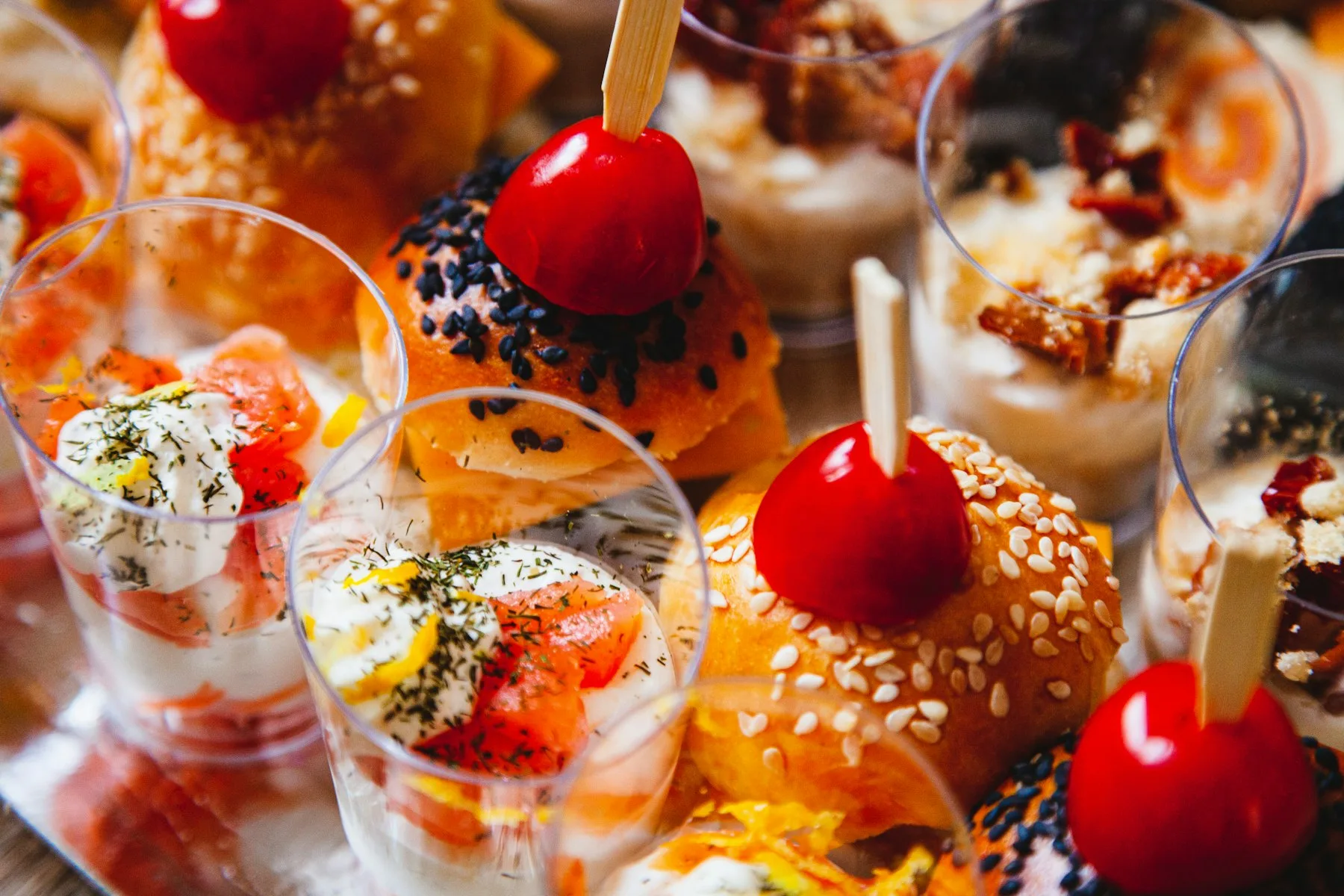
- The season. In July or August on the coast, between Sète and La Grande-Motte, people eat fewer hot canapés and more chilled verrines (small layered starters in glasses). Drinks go up.
- Children. A child under 10 counts as half a guest in most French quotes.
- Who is coming. A sports team and a graduation party do not eat the same amount.
- Food stations. A plancha, an oyster bar or a ham-carving station each replace 2 to 4 canapés per person. Each also needs a member of staff.
- Dietary needs. With 100 guests, plan vegetarian and gluten-free canapés in real numbers, not "a few". Our article on the 14 regulated allergens explains how.
A worked example for 80 guests
Say a reception from 7pm to 9.30pm at a wine estate at the foot of Pic Saint-Loup, north of Montpellier, with no meal afterwards. That is a standing dinner, at 16 canapés per person:
- 80 × 16 = 1,280 canapés in total.
- Cold: 80 × 8 = 640, which is 8 different canapés, 80 of each.
- Hot: 80 × 4 = 320, so 4 different canapés.
- Sweet: 80 × 4 = 320, so 4 different canapés.
Sixteen different items is already a lot for one buffet. Some hosts prefer 10 to 12 items with more of each. Service is simpler, and guests recognise what they liked and go back for it.
Expensive mistakes
First: counting the guests who said yes instead of the guests who turn up. At weddings there are always last-minute absences, but also unannounced plus-ones. Better to fix the final number on a date agreed in the quote.
Second: piling on sweet canapés and forgetting the savoury ones. At 9pm, a guest who has not had dinner leaves hungry, even with ten kinds of macaron on the table.
Third: forgetting bread. Over a three-hour standing dinner, good bread or sliced fougasse (a Provençal flatbread) fills people up without inflating the bill.
Before you ask for a quote
Send four things: the date, the start and finish times, the venue, and the number of adult and child guests. Add what follows the reception. With that, the quote can show the number of canapés per person, line by line. For a wedding, see our wedding catering page, then get in touch through the contact page.
A vin d'honneur is shorter than a standing dinner and the quantities drop: see how long a French wedding drinks reception lasts, and what to serve.
Frequently asked questions
How many canapés for a standing dinner that replaces the meal?
Plan 15 to 20 canapés per person for a standing dinner (cocktail dînatoire) of 2.5 to 3 hours, split between savoury, hot and sweet. Below 12 pieces, plan a meal afterwards. The format is set out on our standing dinner reception page.
Does a plancha or oyster bar change the number of canapés?
Yes. Each food station (plancha, oyster bar, ham carving) replaces 2 to 4 canapés per person and ties up one member of staff. A live plancha draws on the spit, plancha and brasero menu; oysters on the seafood buffet.
How do you split cold, hot and sweet canapés?
Out of 18 canapés, a common base is 8 to 10 cold, 4 to 5 hot and 3 to 4 sweet. Hot pieces are held at 63 °C (145 °F) until service, cold ones at 3 °C (37 °F) or below, so plan an oven or chilled boxes to suit the room.
Do children count as adults?
No. A child under 10 usually counts as half a cover on a quote. For 80 guests including 15 children, you cost about 72.5 covers, not 80. Give the number of adults and children when you ask for a quote so the maths is right.
How many canapés for a vin d'honneur before the meal?
For a 90-minute vin d'honneur (the drinks reception after a French ceremony) before dinner, plan 8 to 10 savoury canapés per person, with guests then sitting down for a starter, main and dessert. Exact quantities are on our drinks reception and standing aperitif page.