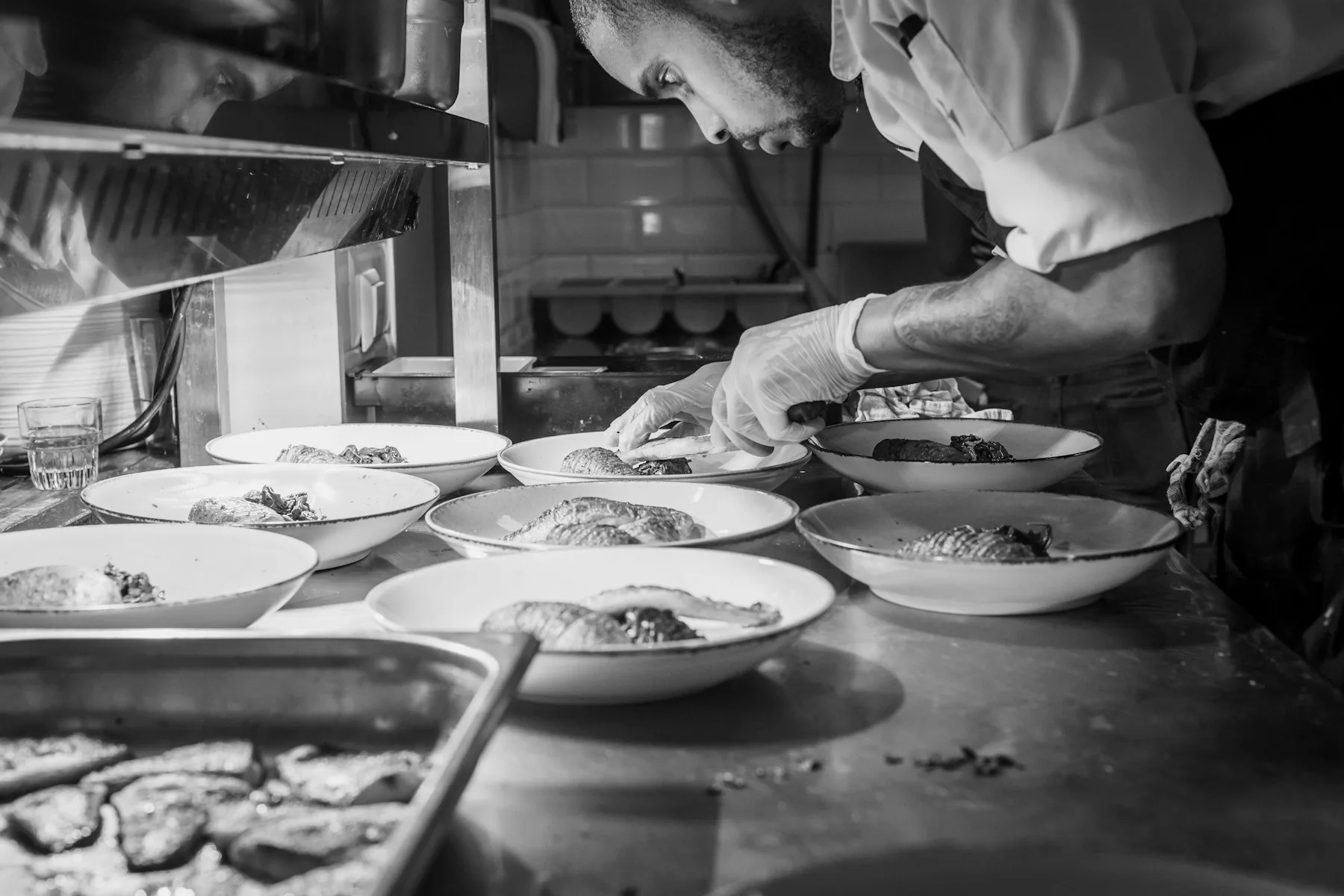
EU Regulation No 1169/2011, known as the FIC or INCO regulation, lists 14 allergens whose presence must be made known to the consumer. In France, decree No 2015-447 of 17 April 2015 extended this to food that is not pre-packed, including food served by caterers, from 1 July 2015. The information must be given in writing.
If you are planning from the UK or Ireland, the list will look familiar: it is the same 14 allergens you know from home. Guests from the United States work from a shorter list of nine major allergens, so celery, mustard, lupin, sulphites and molluscs may not be on their radar. Ask them anyway.
The 14 allergens
| No. | Allergen | Where it turns up at a reception |
|---|---|---|
| 1 | Cereals containing gluten (wheat, rye, barley, oats, spelt, kamut) | Bread, puff pastry, tarts, breadcrumbs, thickened sauces |
| 2 | Crustaceans | Prawns, langoustines, bisques |
| 3 | Eggs | Mayonnaise, mousses, pastries, fresh pasta |
| 4 | Fish | Tartares, fish rillettes, anchovy sauce, some stocks |
| 5 | Peanuts | Satay sauces, oils, some desserts |
| 6 | Soya | Soy sauce, tofu, lecithin |
| 7 | Milk | Cheese, cream, butter, gratins |
| 8 | Tree nuts | Almonds, hazelnuts, walnuts, pistachios in pestos and pastries |
| 9 | Celery | Stocks, stuffings, mixed salads |
| 10 | Mustard | Dressings, sauces, marinades |
| 11 | Sesame seeds | Bread, tartares, Middle Eastern and Asian sauces |
| 12 | Sulphur dioxide and sulphites (above 10 mg/kg or 10 mg/litre) | Wine, dried fruit, some cured meats |
| 13 | Lupin | Some flours and pastries |
| 14 | Molluscs | Oysters, mussels, octopus, squid, snails |
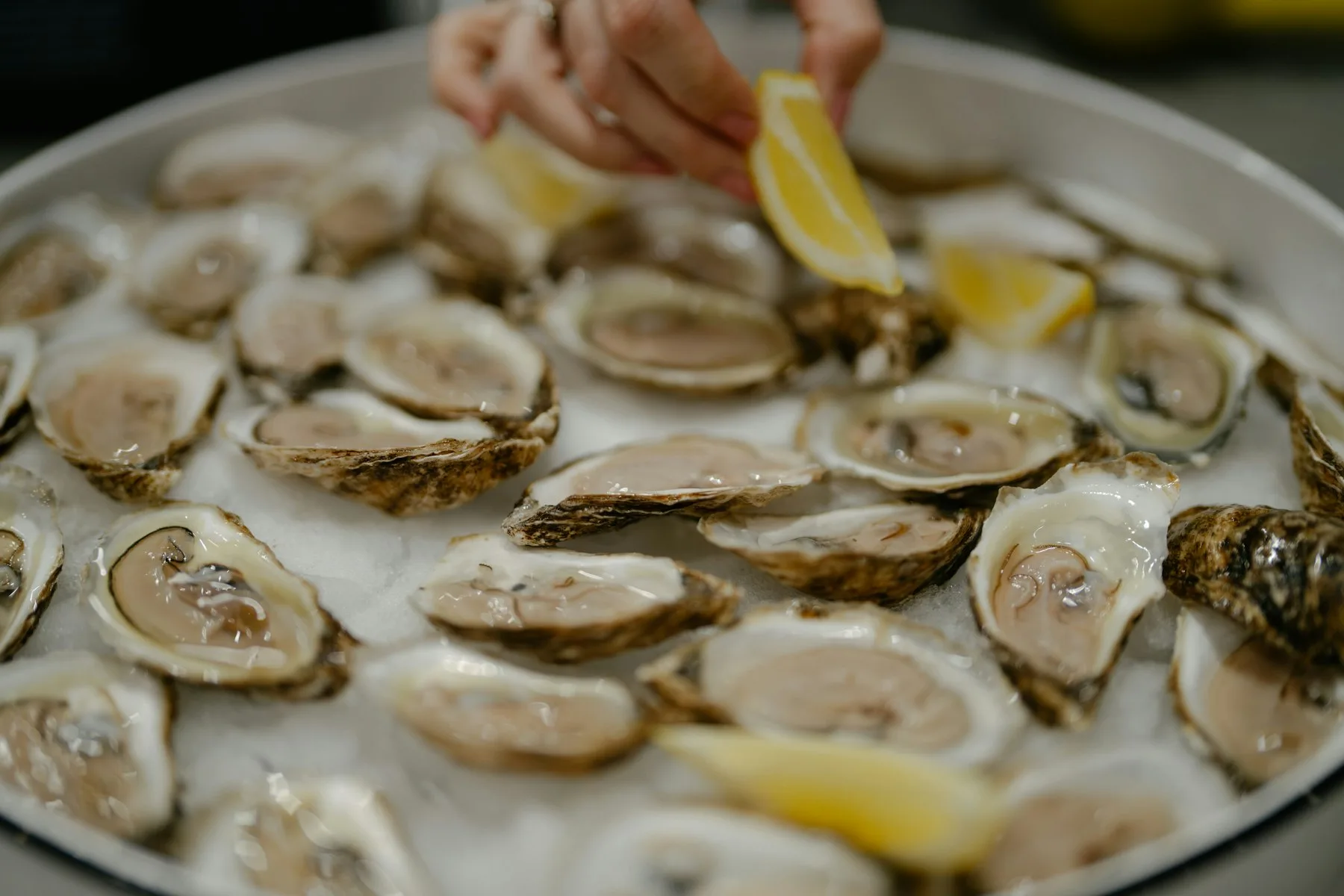
On the Hérault coast, the last two matter a great deal. A tielle sétoise, the spiced octopus pie from Sète, contains octopus (a mollusc) and pastry (gluten). A platter of Thau lagoon oysters falls under molluscs. And every glass of wine served contains sulphites.
What French law requires of the caterer
- Information on the allergens present must be written and available to the guest before they eat.
- Any medium will do: the menu, a card next to the dish, a sheet kept on hand, a QR code.
- Spoken information can add to the written version but cannot replace it.
- It covers ingredients used deliberately. A "may contain traces" warning is no substitute for controlling cross-contamination in the kitchen.
Allergy, intolerance, dietary choice: three different situations
Allergy
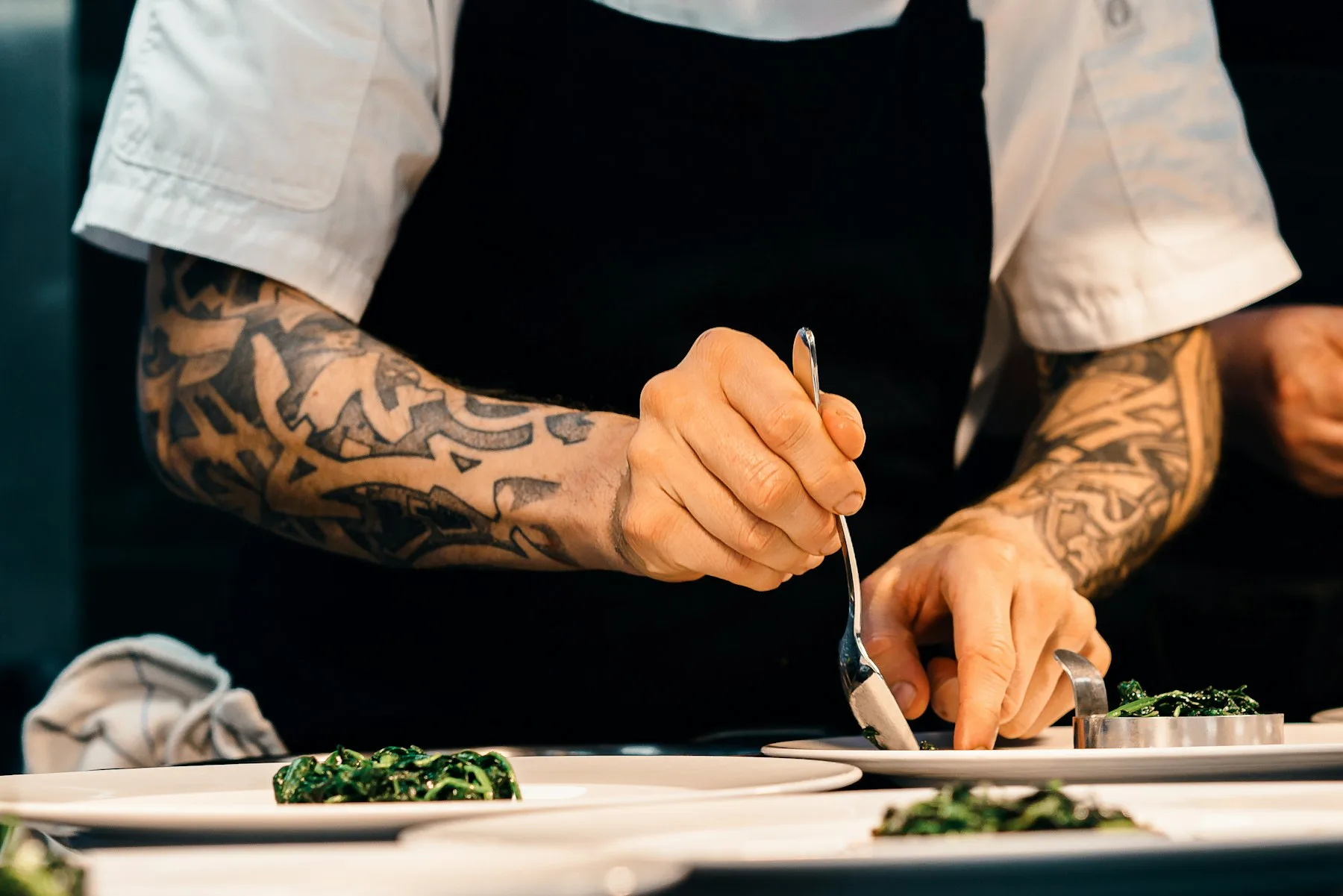
A trace can be enough to trigger a reaction, sometimes a serious one. An allergic guest needs a plate prepared separately, in a closed container with their name on it, and a member of the serving staff who knows about it.
Intolerance
Gluten for someone with coeliac disease, lactose for others. Quantity matters with intolerances, but coeliac disease calls for the same precautions as an allergy.
Dietary choice
Vegetarian, vegan, no pork, halal, kosher. This is not a food-safety issue but a matter of looking after your guests. Count these covers at their real number rather than rounding down.
How to collect your guests' needs
- Add one question to the RSVP card or online form: "Any allergy or dietary requirement?"
- Ask for the person's name, not just a headcount.
- Make the answer distinguish between a medical allergy and a preference.
- Send the list to the caterer by the date set in the quote, then pass on any changes as they come in.
- For a seated meal, note where each guest concerned is sitting.
With a guest list spread over several countries, keep the wording plain: "severe peanut allergy", "coeliac", "vegetarian, eats fish". Precise terms leave no room for doubt when the list is passed from kitchen to serving team.
At the buffet
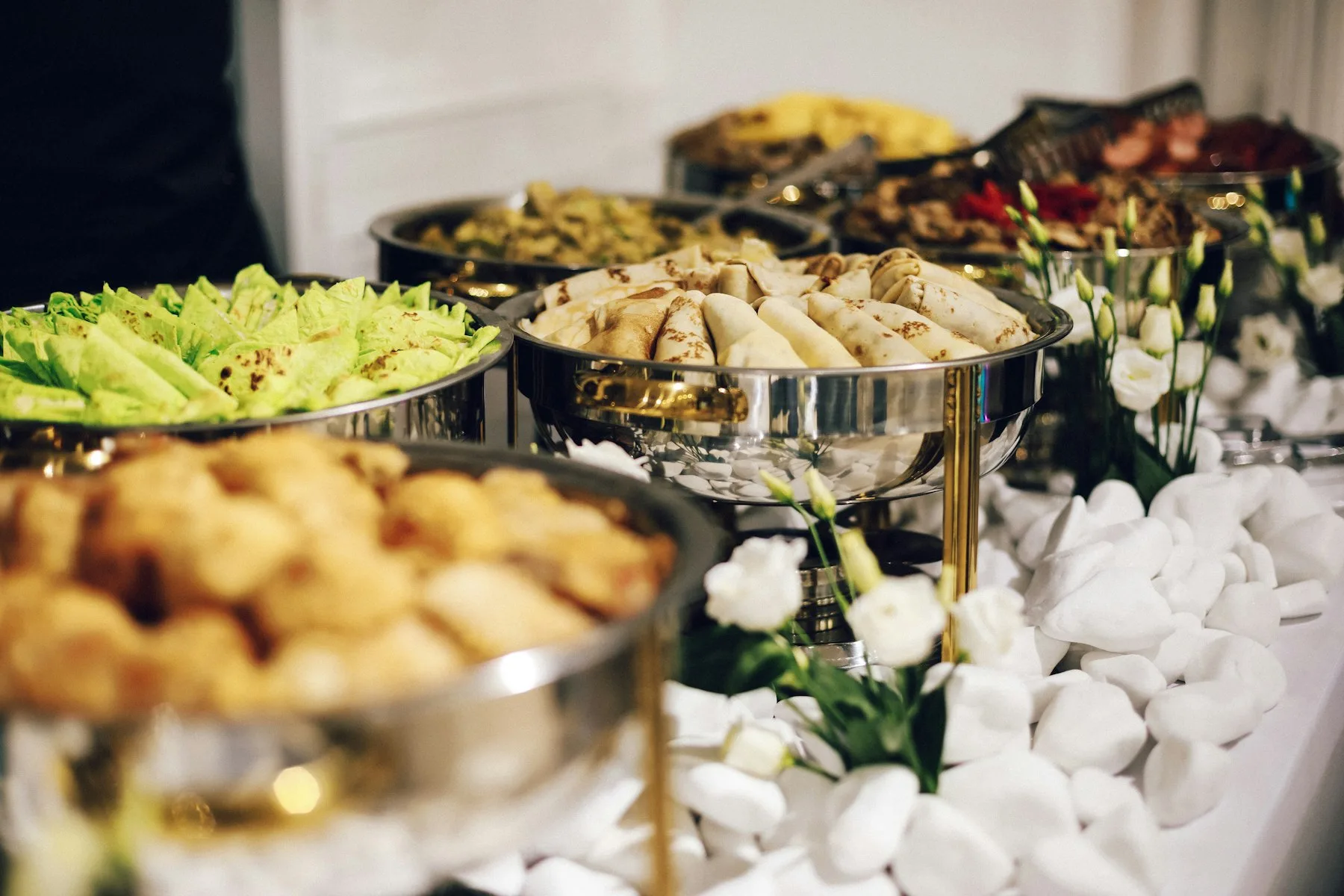
A buffet is the trickiest format. One guest serves themselves with the spoon from the hazelnut dish and puts it in the dish next door, and all the care taken in the kitchen is undone. A few simple rules:
- one serving utensil per dish, never shared;
- one label per dish, listing its allergens;
- gluten-free dishes at the start of the buffet, so they are served first;
- a plate made up in advance for each allergic guest.
The choice between a buffet and plated service is covered in our article on seated meal or buffet.
Hidden allergens in southern French food
Some regional dishes contain an allergen visitors would not expect:
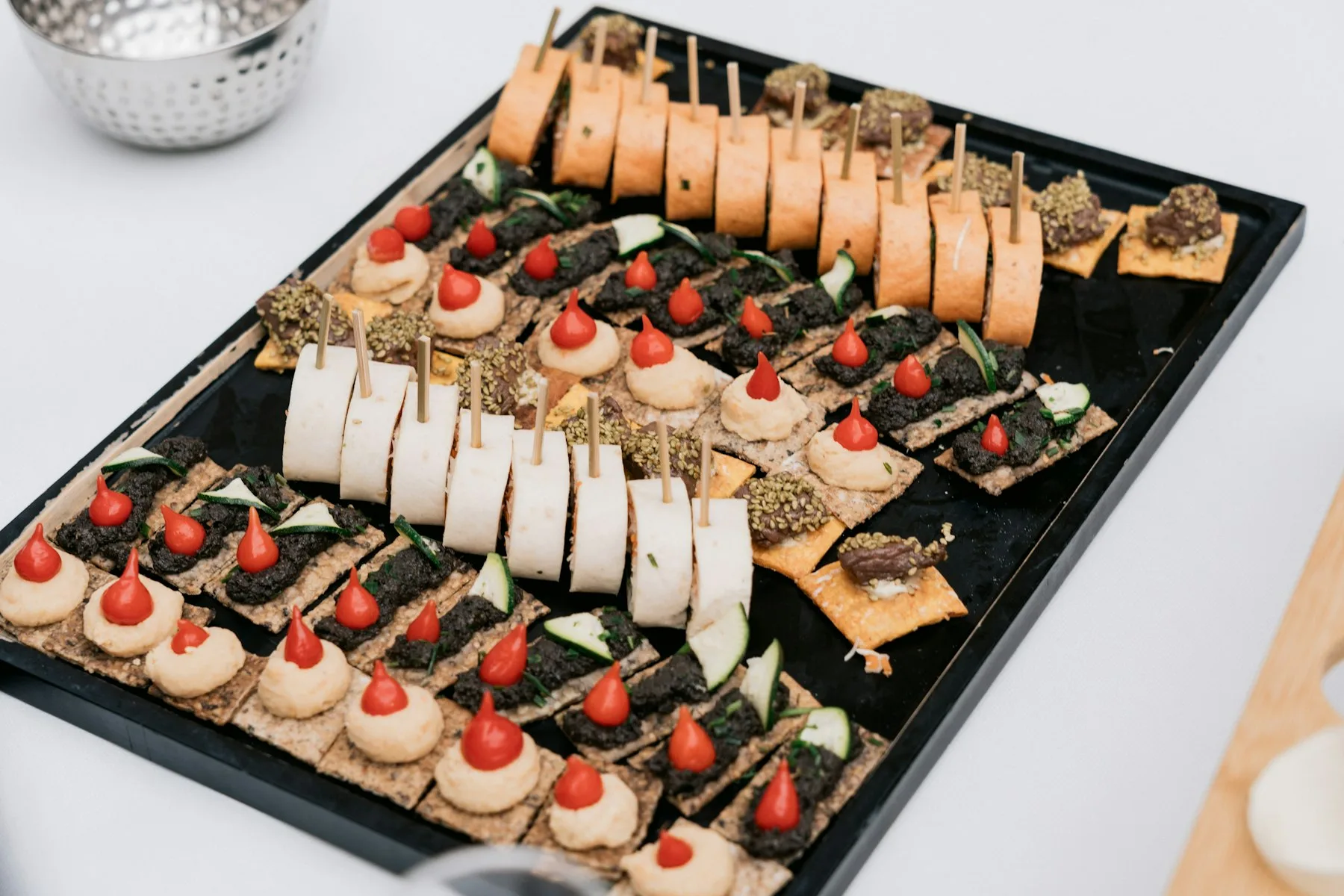
- tapenade (olive paste) and anchoïade both contain anchovies, so fish;
- rouille and aïoli, the garlic sauces served with fish, contain egg;
- pesto contains cheese, so milk, and sometimes cashew nuts;
- stocks and sauce bases often contain celery;
- dried apricots and cooking wine bring sulphites.
A recipe that changes between the tasting and the big day changes its allergens too. Ask for the final sheet, dish by dish.
On the day
Someone on the serving team must be able to answer "what's in this dish?". The allergen sheet stays available at the buffet or with the service manager. For a guest at risk of a severe reaction, a friend or relative should know where their emergency medication is kept. That is not the caterer's job, but it is the question families most often forget.
What the quote should state
The quote should list the number of adapted covers by type: gluten-free, vegetarian, nut-free and so on. Each requirement is then carried over to the final menu. For a wedding or a company seminar, send the list with your request through the contact page.
Frequently asked questions
Since when must a caterer declare allergens?
Since 1 July 2015, under French decree no. 2015-447 of 17 April 2015, which extends to non-prepacked food the duty set by EU regulation INCO no. 1169/2011. Information on the 14 allergens must be written and available before eating.
Which allergens are most common on the coast?
Crustaceans and molluscs. A Sète tielle contains octopus (mollusc) and pastry (gluten); a platter of oysters from the Étang de Thau counts as molluscs; the wine served counts as sulphites. These dishes appear often on a seafood buffet.
How do you record your guests' needs?
Add a question to the reply card or form: "Allergy or special diet?", with the person's name, not just a number. Send the list to the caterer by the date set in the quote, then any changes as they come. For a wedding, note the seating place too.
Is a buffet risky for an allergic guest?
It is the trickiest format: a utensil moved from a dish with hazelnuts to the next one undoes the care taken in the kitchen. Plan one utensil and one label per dish, gluten-free dishes at the front, and a separate plate prepared for each allergic guest.
Which southern dishes hide an unexpected allergen?
Tapenade and anchoïade contain anchovies (fish); rouille and aïoli contain egg; pesto contains milk and sometimes cashews; sauce bases often contain celery. Ask for the final sheet, dish by dish, because a recipe that changes also changes its allergens.