A plated dinner needs more staff and sets the pace of the evening; a buffet needs more equipment and lets guests move around. The final cost is often similar, because what you save on service you spend on crockery and quantities. The choice mostly depends on the venue and the running order of the day.
The three formats
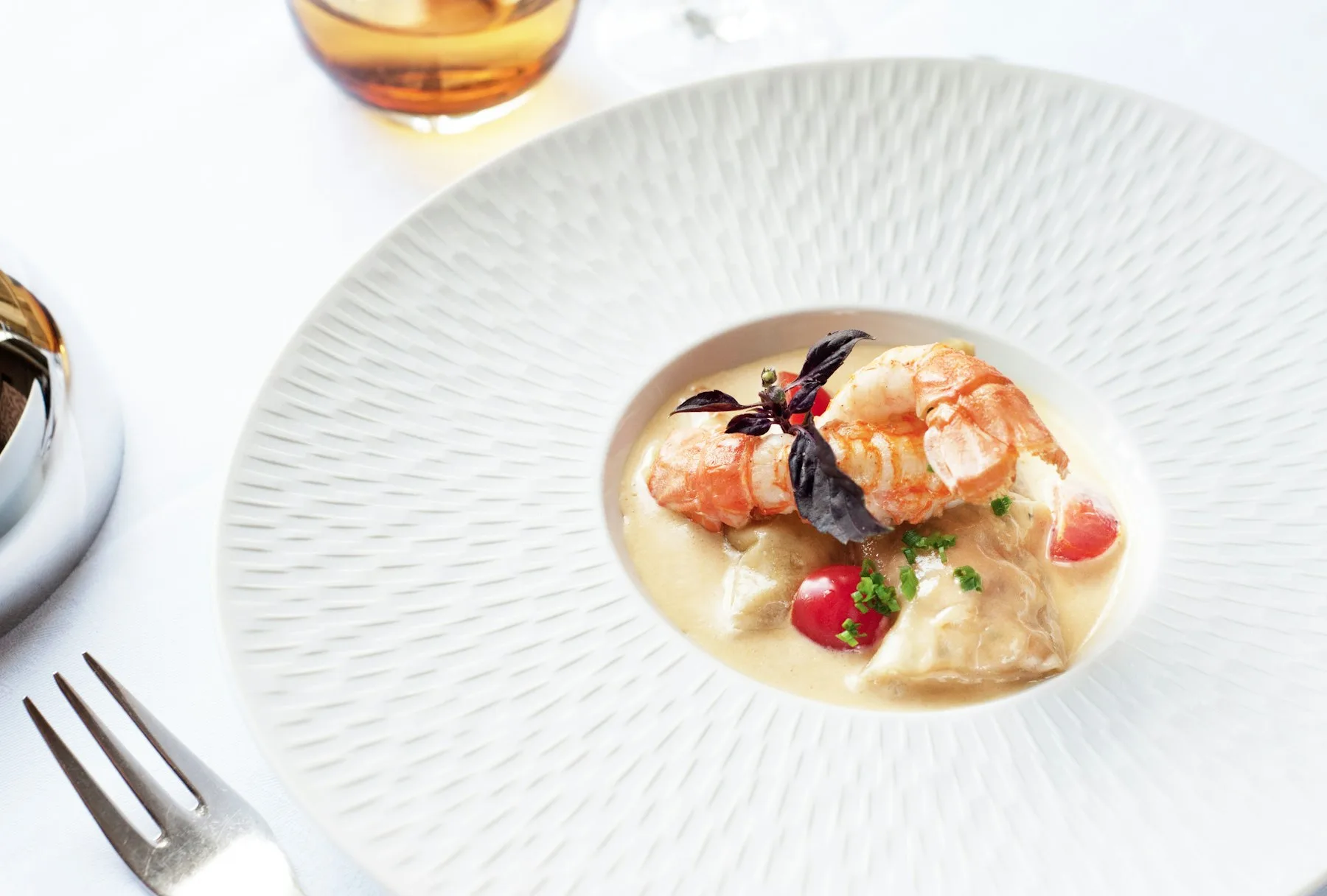
Plated service
Every guest gets the same plate, dressed in the kitchen. The caterer sets the rhythm: starter, main, cheese, dessert (in France, cheese comes before dessert). You need a service kitchen or a space set up as one, and roughly one server for every 10 to 15 guests.
Buffet
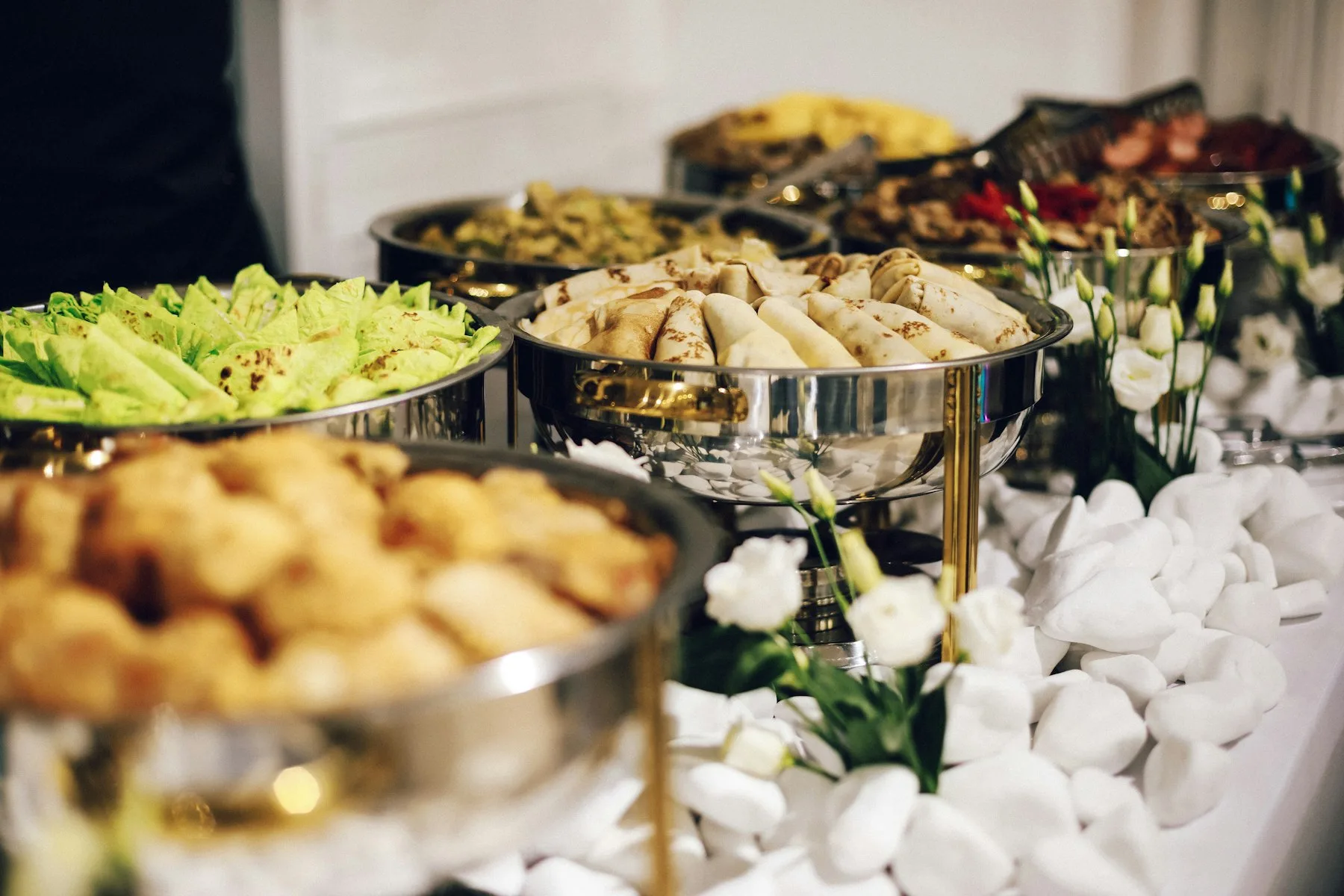
Dishes are laid out on one or more tables and guests help themselves. Fewer staff, but more food: guests try everything, and the last in line must find the buffet as full as the first did.
Family-style sharing platters
Dishes placed in the middle of each table, to share. A halfway house, relaxed and sociable, which suits the long rectangular tables found at many wine estates.
Side by side
| Criterion | Plated | Buffet |
|---|---|---|
| Staff | High (1 per 10 to 15 guests) | Lower (1 per 25 to 40) |
| Length of the meal | 2.5 to 3.5 hrs | 1.5 to 2.5 hrs |
| Quantities | Set per plate | 15 to 20% extra |
| Equipment | Crockery per cover | Display stands, chafing dishes, more serving ware |
| Dietary needs | Dedicated plate, by name | Clear labelling on every dish |
| Atmosphere | Speeches, entertainment, controlled pace | Movement, conversation between tables |
What the venue decides for you
Before thinking about taste, look at the room. A wine estate near Montpellier with a fitted kitchen makes hot plated service possible. A village hall (salle des fêtes) with no kitchen points towards a cold buffet, or dishes held in heated boxes.
Keeping food hot follows one simple rule: a hot dish served later must stay at 63 °C (145 °F) or above, under the French order of 21 December 2009. Without a hot cabinet or oven on site, a slow-cooked dish for 120 people becomes hard to hold. A hot buffet then needs plenty of chafing dishes, electric if possible.
Guest numbers
The 2026 Mariages.net report gives an average of around 90 guests per wedding in France. At that size, both formats work. Above 150 guests, a single buffet creates a queue: you either double the serving lines or switch to sharing platters.
Dietary needs and allergies
With plated service, a guest who is gluten-free or allergic to nuts receives a plate with their name on it. It is the safest option. At a buffet, each dish must be labelled with its allergens, and serving spoons must not travel from one dish to another. EU and French rules require written information on the 14 regulated allergens for food that is not pre-packed. Our article allergies and dietary needs has the list.
How the evening runs
- Speeches, videos, entertainment: easier to slot in between plated courses.
- First dance at a set time: a plated meal lets you keep to it.
- Lots of children: a buffet frees them earlier, and their parents too.
- Guests who do not know each other: a buffet gets them mingling, useful when two families from different countries meet for the first time.
Mixing the two
Many weddings combine both. A plated starter, then a buffet of hot dishes. Or a full plated dinner followed by a dessert buffet around the pièce montée, the traditional French tower of cream-filled choux buns. These combinations cut staff for part of the meal while keeping a moment at the table.
The day-after brunch is almost always a buffet. See the day-after wedding brunch.
The equipment that makes the difference
For 100 plated guests, allow per cover one plate per course, two to three glasses and cutlery for each course. Over four courses, that is more than 400 plates to wash or take away. The quote should say whether crockery goes back dirty or whether washing-up is done on site.
At a buffet, guests come back for more: allow 1.5 plates per person per course. Add display stands, electric chafing dishes, food covers and allergen labels.
Either way, ask who supplies the table linen and who sets up the tables. At some estates the furniture is included in the hire; at others you have to rent it.
How to decide
- Look at what the venue allows: kitchen, electricity, space for a buffet.
- Count the dinner guests, not the vin d'honneur guests.
- List the key moments of the evening and their times.
- Ask for a quote for both formats, item by item.
Our wedding catering page sets out the formats. For a side-by-side quote, send the date, the venue and the number of guests through the contact page.
Plated or buffet changes the number of staff, and so the bill: the figures are in the wedding catering budget guide for the Hérault.
Frequently asked questions
Does a plated meal cost more than a buffet?
The final cost is often close: what you save on service, you spend on crockery and quantities. A buffet needs a 15 to 20% quantity margin and more equipment; plated service needs one server for every 10 to 15 guests. The figures are in the Hérault wedding budget.
How many servers for a buffet of 100?
For a buffet, plan one server for every 25 to 40 guests, against one for 10 to 15 when plated. Above 150 people, a single buffet creates a queue: you double the serving lines or move to sharing platters down the centre of the tables.
Which format is safest for allergies?
Plated service: an allergic guest gets a named plate, prepared separately. At a buffet, every dish needs its allergen label and a clean serving utensil, with gluten-free dishes served first. Written information has been compulsory since 1 July 2015.
Does the venue dictate the format?
Often. A domaine with a fitted kitchen near Montpellier allows hot plated service; a village hall with no kitchen points towards a cold buffet or heated boxes holding dishes at 63 °C (145 °F). Look at the room before choosing the local and refined menu.
Can you mix the two formats?
Yes, many weddings do: a starter served at the table then a hot buffet, or a plated meal followed by a dessert buffet around the cake tower. These combinations cut staff over part of the meal. The options are on our wedding catering page.