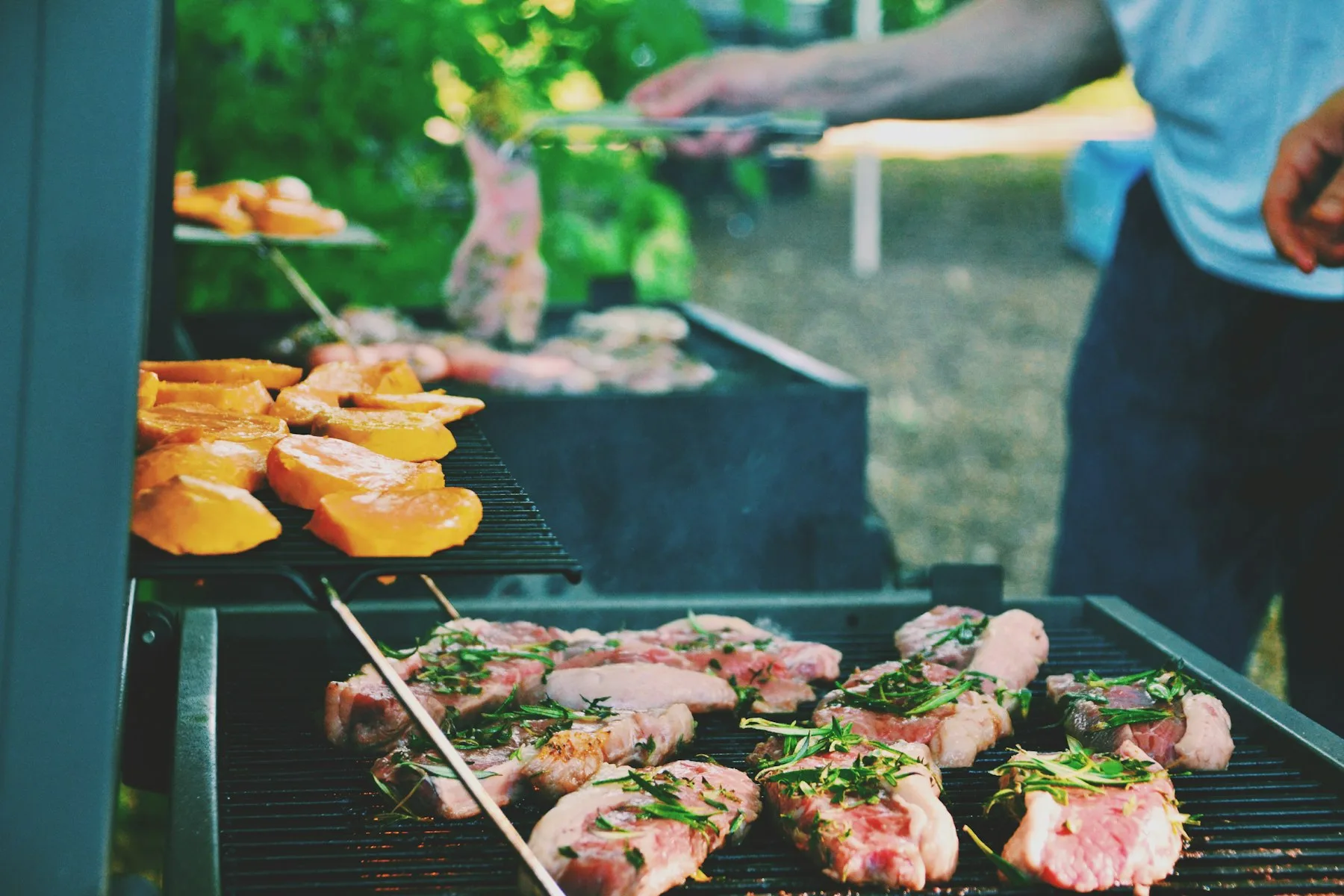
Smoked ribs cook low and slow for several hours. Weber recommends 110 to 120 °C (230 to 250 °F) over indirect heat, for five to eight hours depending on thickness. On a garden barbecue that means four racks. For 100 guests you need more than fifty, and the question becomes one of organisation rather than recipe.
The three stages of cooking ribs
American barbecue fans call it the "3-2-1" method: three hours smoking uncovered, two hours wrapped in foil, one hour finishing with sauce. Weber's own recipes follow the same logic without the round numbers:
- Smoking at 110 to 120 °C over indirect heat, lid closed. The meat takes on its colour and smoky flavour.
- Wrapping in heavy-duty foil over very gentle heat for 45 minutes to an hour, until the meat pulls away easily from the bone.
- Glazing: sauce is brushed on and the ribs go back for about 15 minutes at 110 °C to caramelise.
The second stage is the one that makes or breaks them. Without wrapping, ribs stay firm and dry out at the edges. Wrapped too long, they fall apart when you try to cut them.
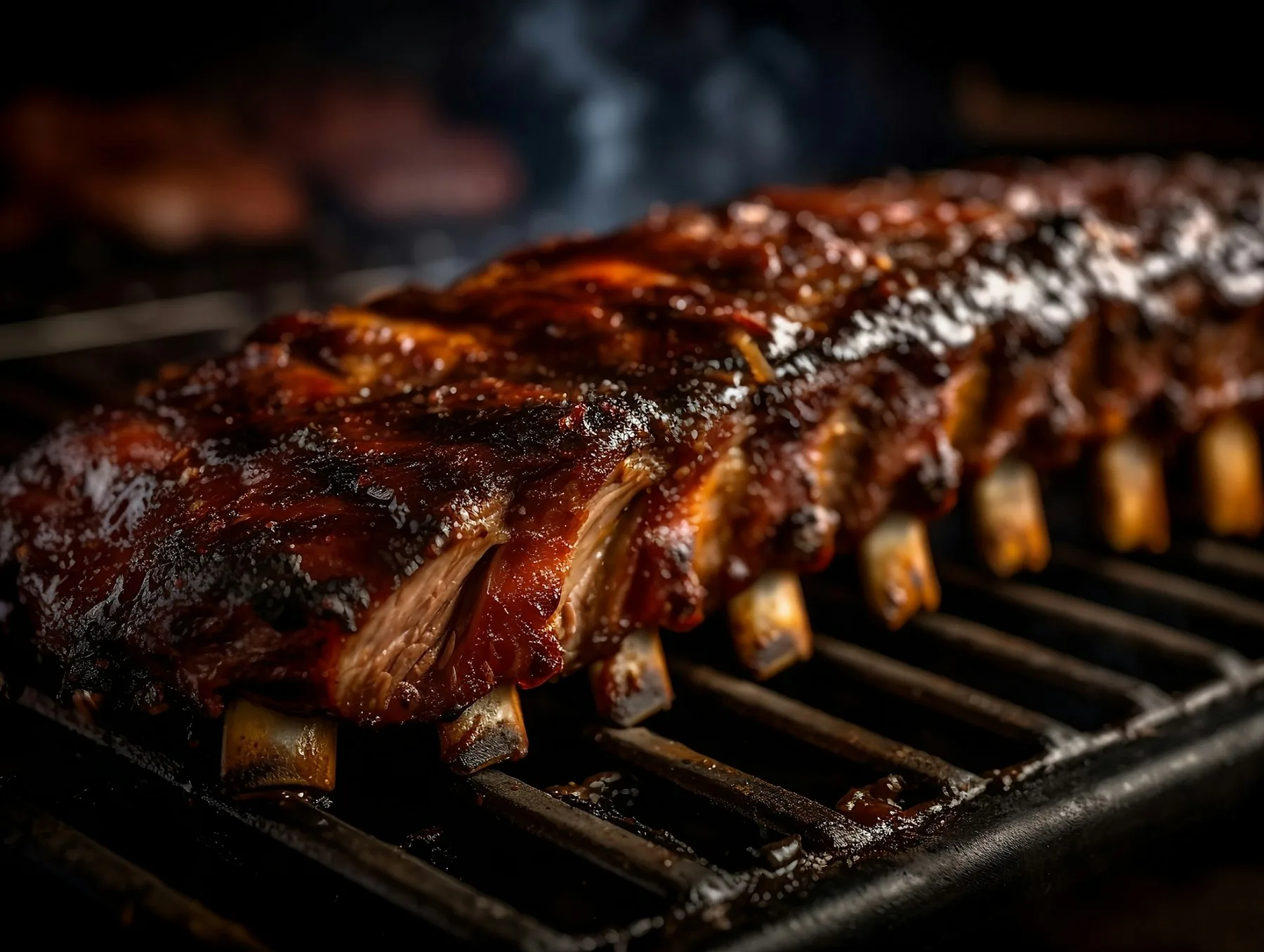
Cook the day before, glaze on site
For large numbers, cooking everything on the day causes problems of space and timing. The usual answer is cook-chill: smoking and cooking the day before, rapid cooling, cold storage, then glazing at the venue.
French food-hygiene rules (the order of 21 December 2009) govern this step. According to the trade's standard record sheets, the core temperature must drop from 63 °C to 10 °C (145 °F to 50 °F) within two hours, after which the food is kept between 0 and 3 °C (32 to 37 °F). When it is reheated, it must not spend more than an hour between 10 °C and 63 °C. Temperature records are kept for at least three months.
The practical benefit: the final glaze takes a quarter of an hour. The ribs arrive glossy and hot at the planned time, even when the best man's speech has run twenty minutes over.
Quantities
Rules of thumb from the trade, to be adjusted to the rest of the menu:
| Format | Allowance per adult |
|---|---|
| Main course of a meal | Half a rack, or 6 to 7 bones |
| Shared main alongside another meat | 3 to 4 bones |
| Canapé at a drinks party or after-work | 2 to 3 bones, cut individually |
A rack of pork spare ribs usually has 12 to 13 bones. For 100 guests with ribs as the main course, that means around fifty racks.
Production schedule for a Saturday event
- Thursday: meat delivered, racks trimmed (the membrane on the bone side is removed), dry rub applied.
- Friday: smoking, wrapping, rapid chilling, cold storage between 0 and 3 °C.
- Saturday: transport in a refrigerated unit, glazing and reheating on site, carving as they are served.
Splitting the work this way frees up Saturday for the rest of the menu. It also means every batch can be checked the day before, without the pressure of service.
A note on the sauce: barbecue sauces can contain mustard, soya or celery, three of the 14 allergens that must be declared, the same list that applies in the UK. They are flagged in writing like everything else on the menu.
Pork or beef
Classic ribs are pork spare ribs. For guests who do not eat pork, beef short ribs follow the same principle but cook for longer, because the cut is thicker. Let the caterer know how many guests are concerned when you ask for a quote, as you would for any dietary requirement.
Smoking outdoors in an Hérault summer
A smoker runs on wood or charcoal. From 16 June to 30 September, a standing order from the Hérault prefecture dated 25 April 2002 bans the use of fire in, and within 200 metres of, woodland, garrigue (the local dry scrubland) and scrub. Cooking the day before, in the kitchen, gets round this: on site, the glazing is done in an electric oven or on a gas plancha (a flat-top griddle).
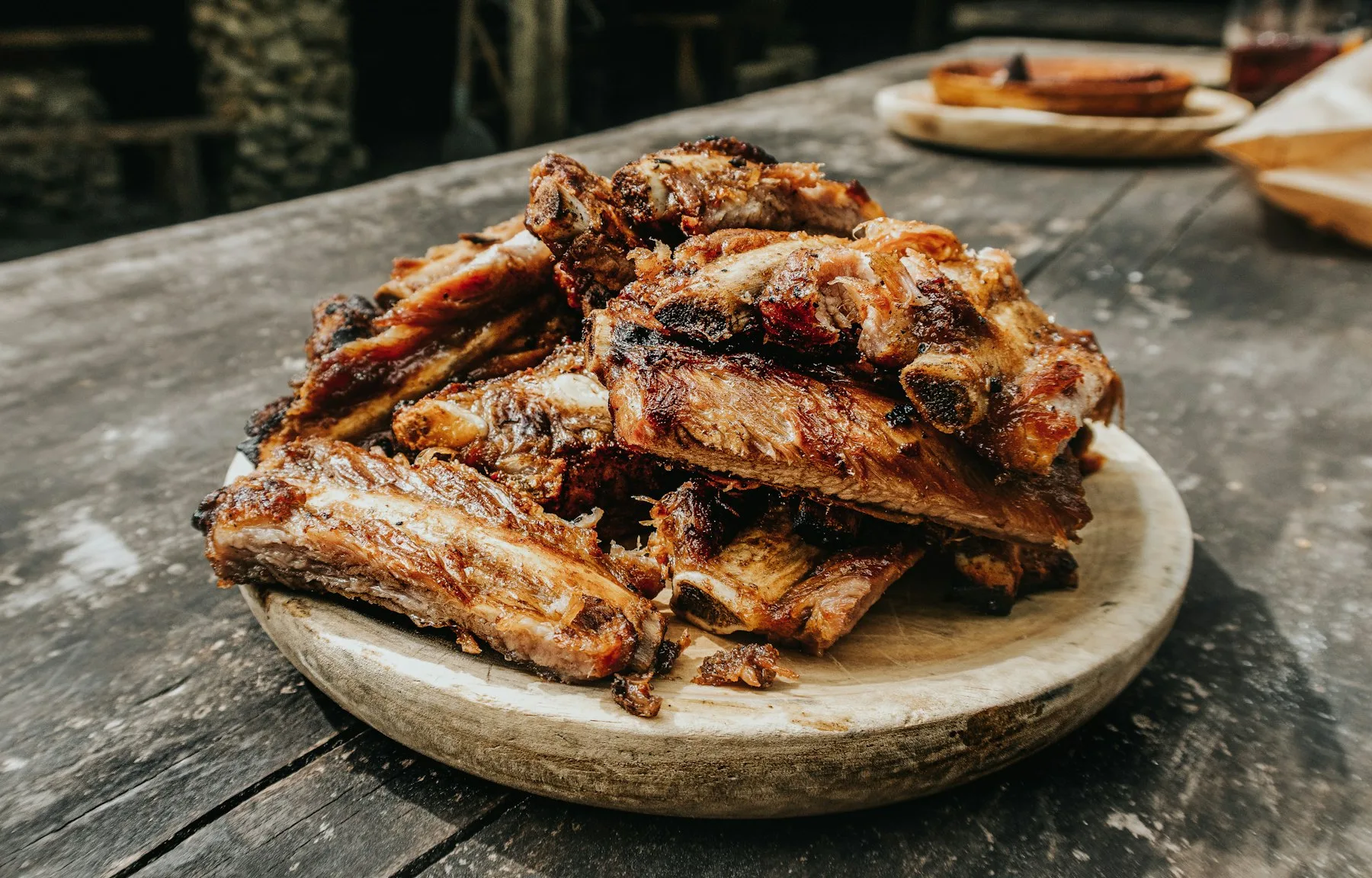
What to plan for at the table
- Plenty of napkins, plus finger bowls or wipes near the buffet.
- Carving boards and someone to cut between the bones as they are served.
- Extra sauce on the side for those who want more, with the rest already on the meat.
Ribs are part of our spit-roast menu, alongside the whole spit-roast lamb covered in méchoui for 50 to 150 guests. Served as finger food, they work well at an after-work event. For a quote in Montpellier or elsewhere in the Hérault, use the contact page.
Frequently asked questions
How many ribs per person?
Half a rack, 6 to 7 bones, as a main course; 3 to 4 bones shared with another meat; 2 to 3 bones as a canapé. A rack has 12 to 13 bones, so 100 guests with ribs as the main need around fifty racks.
What is the 3-2-1 method?
Three hours smoking uncovered, two hours wrapped in foil, one hour glazing with sauce. Weber suggests 110 to 120 °C over indirect heat. The wrapping stage is decisive: too short and the meat dries, too long and it falls apart when cut.
Can ribs be cooked the day before?
Yes, cook-chill: smoke the day before, drop the core from 63 to 10 °C within two hours, store between 0 and 3 °C (order of 21 December 2009). The final glaze on site takes a quarter of an hour, even when the speeches overrun.
What do you need at the table for ribs?
Plenty of napkins and finger bowls by the buffet, carving boards and someone to cut between the bones at service, extra sauce on the side. Served as finger food, ribs work well at an after-work event.
Do ribs suit guests who don't eat pork?
Yes, as beef short ribs, cooked longer because the cut is thicker. Tell the caterer the number when you ask for a quote. Barbecue sauces can contain mustard, soya or celery, three of the 14 allergens. See our spit-roast menu.