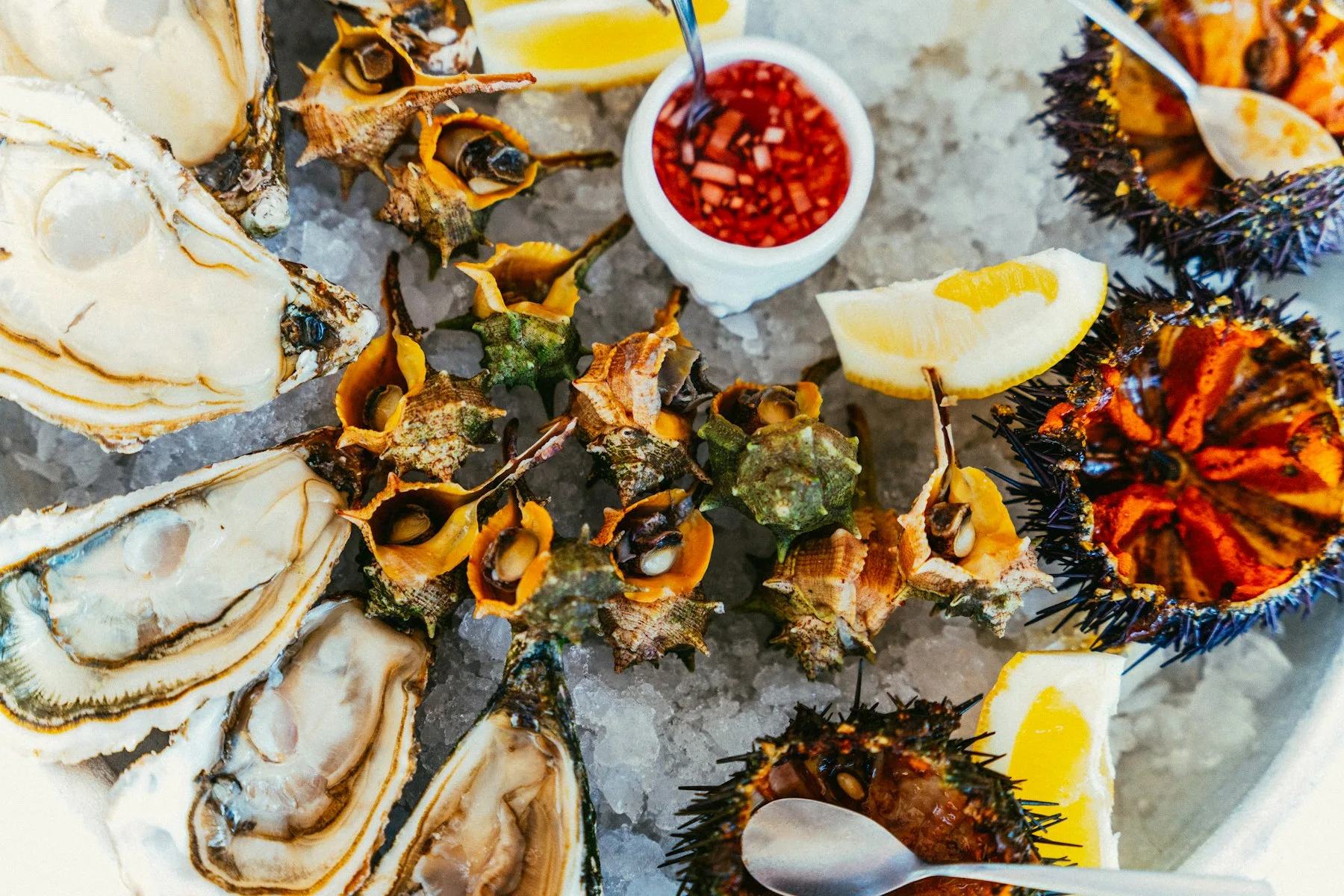
These three don't share a season. Oysters can be served all year, with a caveat in summer. Fresh scallops are fished in France from October to May. Mediterranean squid are most plentiful in autumn and winter. A July wedding menu and a November after-work menu are therefore written quite differently.
Oysters: the Thau lagoon, 30 minutes from Montpellier
The Étang de Thau is a saltwater lagoon of more than 7,000 hectares (about 17,000 acres) between Sète, Mèze, Bouzigues and Marseillan. It produces around 12,000 to 13,000 tonnes a year depending on the source, close to 10% of French output. Unlike the oyster beds of the Atlantic, Brittany or Charente-Maritime, the lagoon has very little tide; oysters here grow hanging from ropes on wooden frames rather than on the foreshore. One producer in Marseillan even recreates tides artificially, a method he calls the "solar tide".
The "R months" rule
English has the same saying as French: only eat oysters when there is an R in the month. According to tradition, the French version goes back to Louis XV, when the lack of refrigeration led to a ban on transporting oysters in the warm months. Today the cold chain takes care of the safety question. What remains is taste: in summer, ordinary oysters spawn and turn milky. Some people like them that way; many don't.
The triploid oyster, developed in 1997 by Ifremer, the French marine research institute, is sterile. It does not produce that milkiness and stays plump in July. It also grows faster: two years instead of three. No labelling rule requires it to be distinguished from a natural oyster; if this matters to you, ask the caterer, who will ask the grower.
Once delivered, oysters are kept between 5 and 15 °C (41 to 59 °F), away from light, according to the DGCCRF, the French consumer protection authority. Our article on seafood buffets and Bouzigues oysters gives quantities per guest.
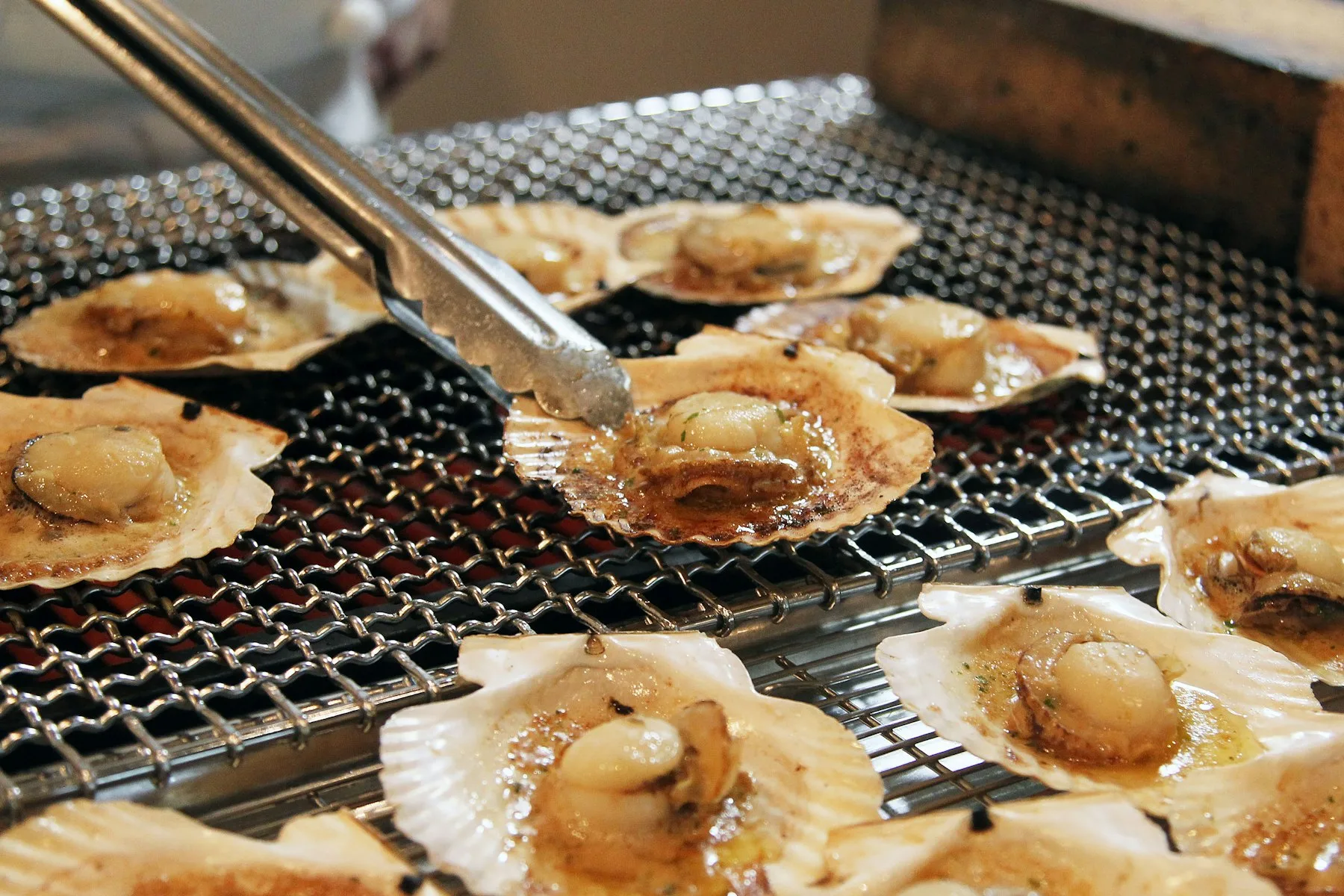
Scallops: two species, one fishing season
In France, two very similar species go by the name coquille Saint-Jacques, according to an Ifremer document: Pecten maximus, the king scallop of the Channel and Atlantic, and Pecten jacobaeus in the Mediterranean. The second has squarer ribs on its shell. In practice, most fresh scallops sold in France come from the Channel and the Atlantic.
French fishing is open from 1 October to 15 May, giving stocks the summer to recover. Each scallop bed opens on dates set by prefectoral order, with a minimum size that varies by area: 102 mm (4 in) in the Bay of Saint-Brieuc, for example.
What this means for a menu: fresh scallops in the shell for a June wedding fall outside the French fishing season. The choice is between frozen scallop meat, declared as such, and a different seafood. The local and fine dining menu adapts to the date.
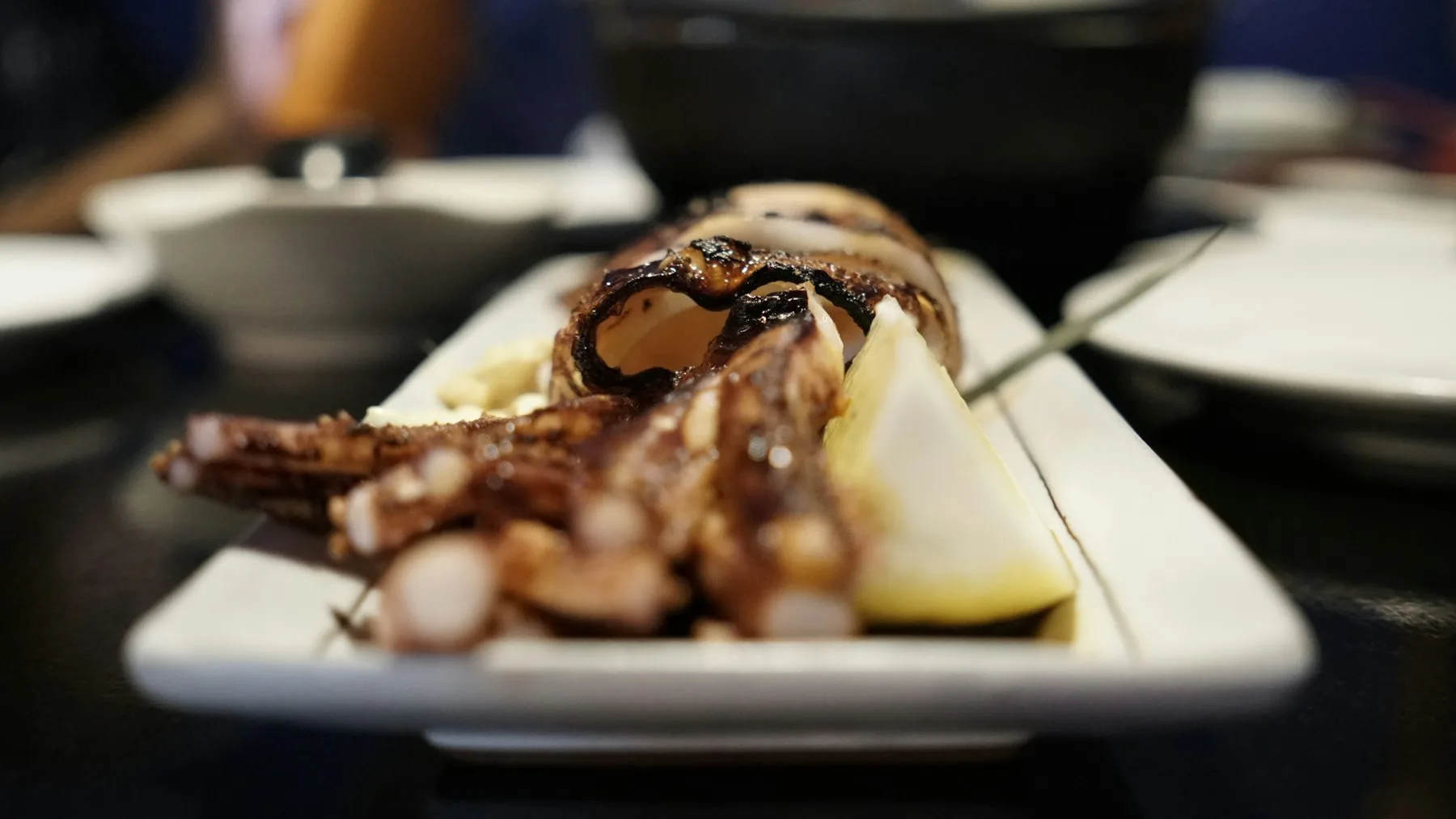
Calamari and squid: two animals, one word on the menu
Calamari (genus Loligo) and the squid French menus call encornet (genera Todarodes and Illex) are separate groups, as an Ifremer publication points out. On fish counters and menus, though, "encornet" is used for both. The encornet proper lives further offshore, 30 to 100 metres (100 to 330 ft) down, and is mostly caught from boats.
In the Mediterranean, squid can be fished almost all year, with a peak in autumn and winter, when calamari move closer to the coast and the harbours. The Gulf of Lion marine park limits recreational fishing to 10 catches per person per day, fish and cephalopods combined. For a reception between November and February, Mediterranean squid is the seasonal choice. In summer, supply is less reliable.
Sète has its own squid speciality: the tielle, a small pie filled with spiced octopus and tomato, brought over by fishermen from Gaeta in Italy.
The calendar at a glance
| Product | Oct to Dec | Jan to Mar | Apr to May | Jun to Sep |
|---|---|---|---|---|
| Thau oysters | Yes | Yes | Yes | Yes, milky unless triploid |
| Fresh scallops | Yes | Yes | Until 15 May | No (fishing closed) |
| Mediterranean calamari and squid | Peak | Peak | Yes | Irregular |
Mediterranean or Atlantic: what difference does it make?
With oysters, you can taste it: Thau produces a fleshy oyster with a nutty flavour, while tidal beds give a saltier, more briny oyster. With scallops, it is mostly about availability. With squid, the Mediterranean supplies the winter.
Pair the oysters with a Picpoul de Pinet, a crisp white made in six villages on the shores of the Thau lagoon, and the glass and the plate come from the same landscape. Pairings are covered in Languedoc food and wine pairings.
For a seafood menu in Montpellier or Sète, include your date when you send a request from the contact page: the date decides what will be fresh.
Frequently asked questions
Can oysters be eaten all year round?
Yes; refrigeration settled the old "R months" safety concern. What remains is taste: in summer ordinary oysters turn milky while spawning. The triploid oyster, developed in 1997 by Ifremer, stays plump in July. Oysters keep between 5 and 15 °C.
When are fresh scallops fished in France?
From 1 October to 15 May, to let stocks recover over summer. Fresh scallops in the shell for a June wedding are therefore out of season: the choice is between frozen scallop meat, declared as such, and a different seafood.
What is the squid season in the Mediterranean?
Fishing is possible almost all year, peaking in autumn and winter when calamari move closer to the coast. For a reception between November and February it is the seasonal choice. In summer, supply is less reliable.
Atlantic or Mediterranean seafood?
The Thau oyster is fleshy and nutty; tidal beds give a saltier oyster. With scallops it is mainly availability; with squid, the Mediterranean supplies the winter. The local and fine dining menu adapts to the date.
Which wine goes with a seafood menu?
A Picpoul de Pinet, a dry white from six villages on the shores of the Thau lagoon, so glass and plate share one landscape. For a seafood buffet in Montpellier or Sète, give your date: it decides what is fresh. See our seafood buffet.