A food truck serves a paying public, one order at a time, in a continuous flow. A buffet serves a group known in advance, at a set time. At a festival the two often sit side by side: trucks for the audience, a buffet or boxed meals for artists and volunteers. The choice depends on who is paying, how many people eat at the same moment, and what the site allows.
Who pays for the meal?
If the audience buys its own food, the festival hosts vendors: food trucks, stalls, a bar. The organiser selects them and either rents them a pitch or takes a share of their takings. If the meal is free, for crew or guests, the organiser orders and pays a caterer. These are two different contracts, and often two different suppliers.
Throughput: the criterion people forget
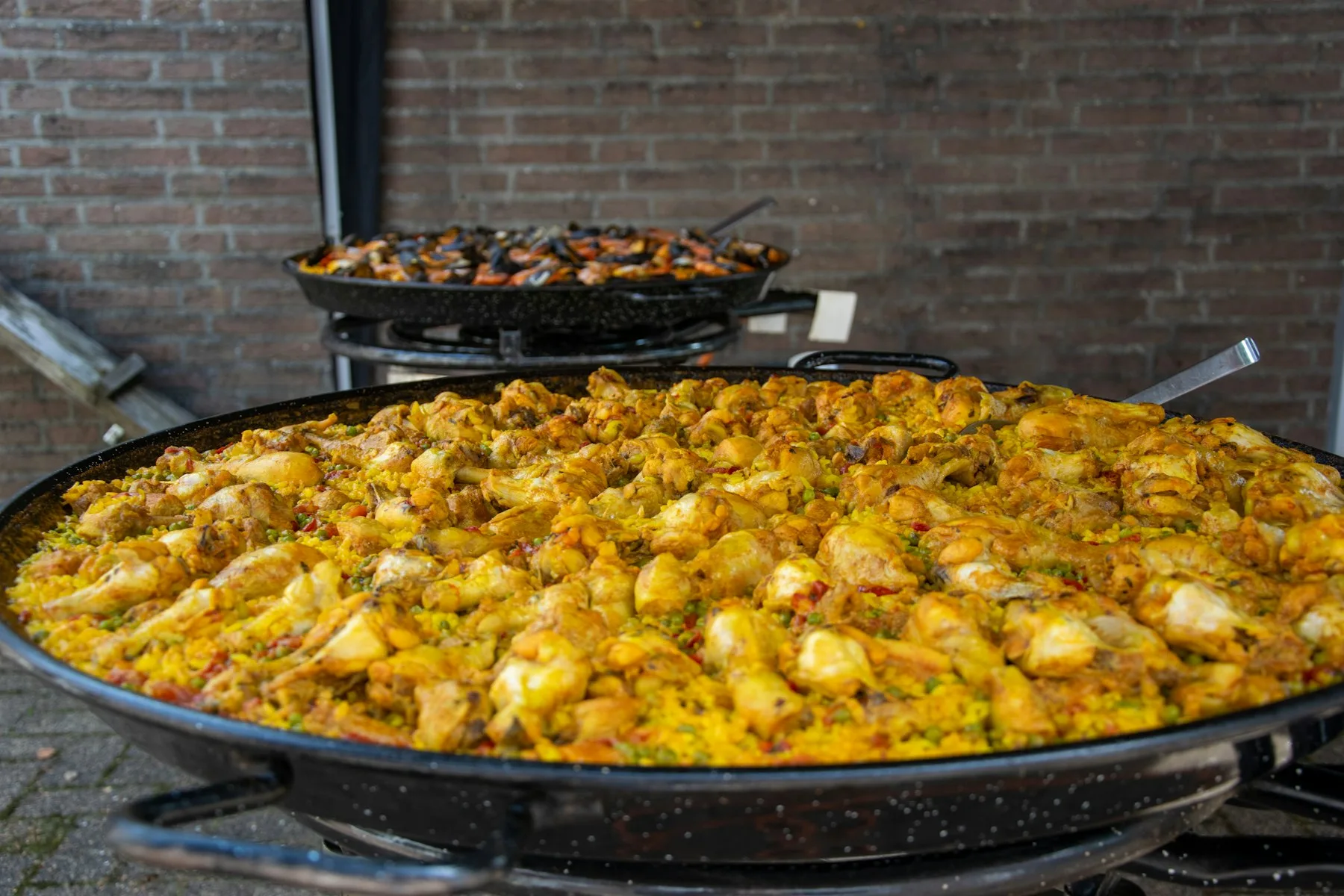
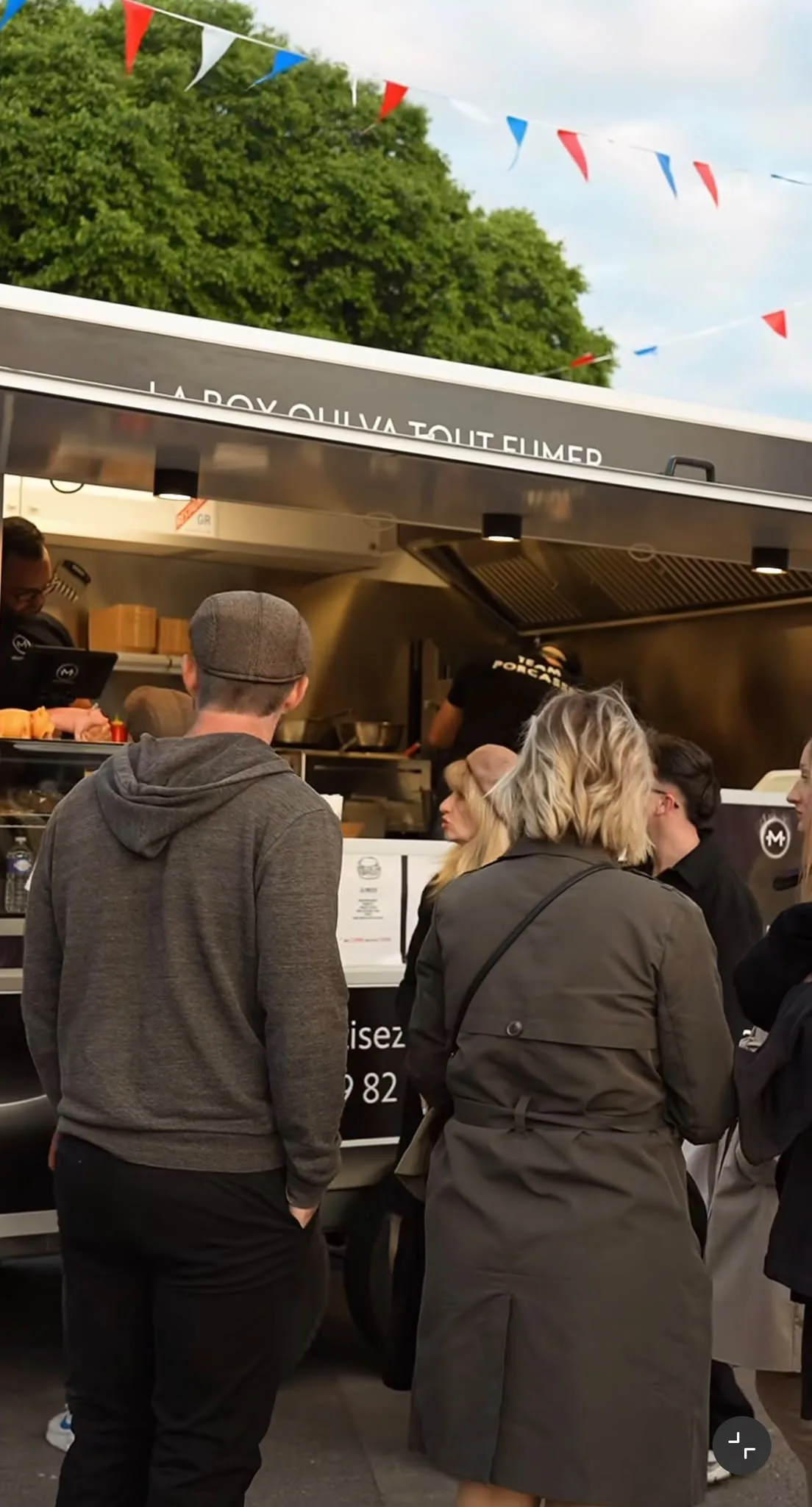
A food truck typically serves one portion every 30 seconds to a minute, depending on the dish. That is 60 to 120 portions per hour per truck. When 1,500 people come out of a concert at once, you need several trucks, or food that is already prepared.
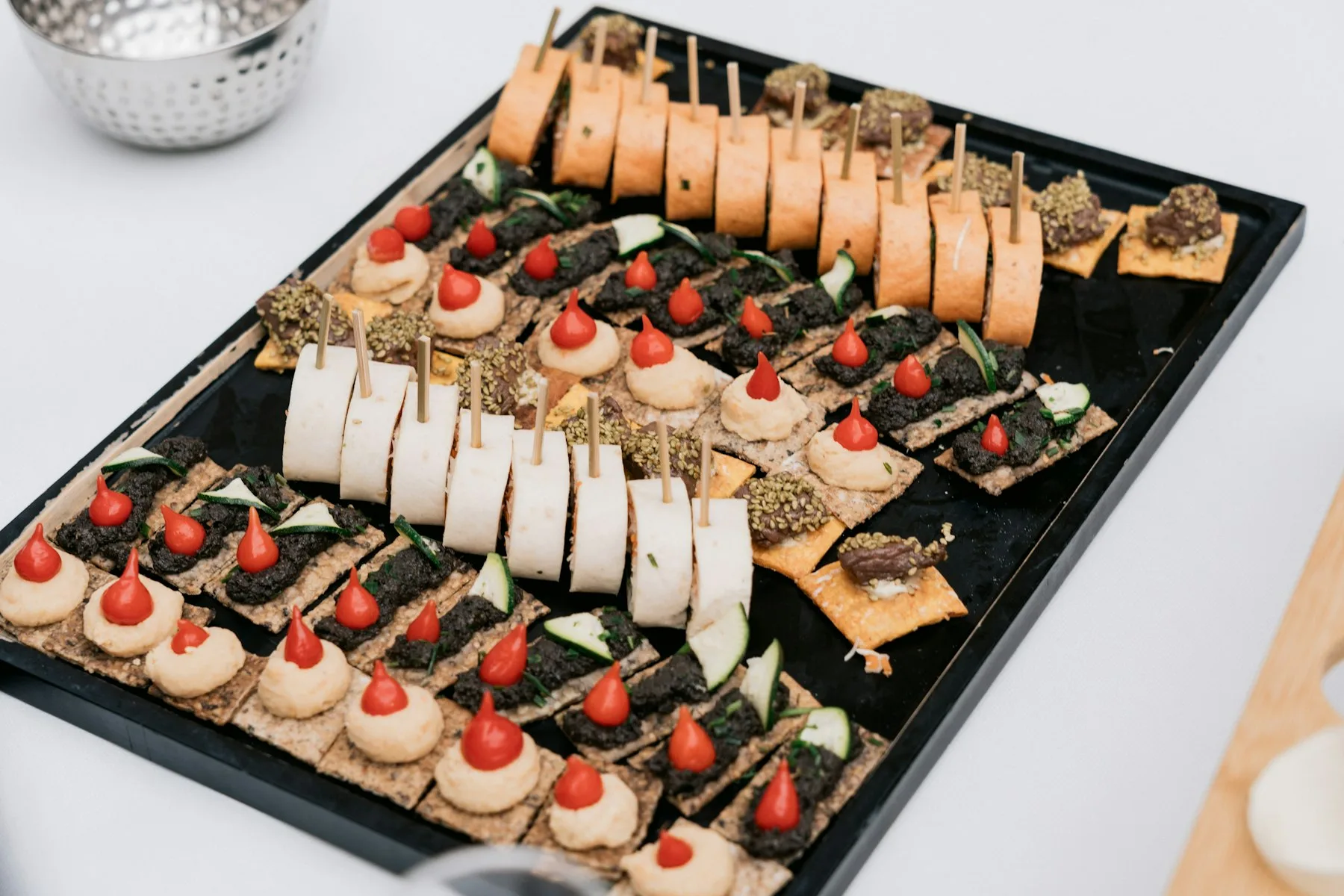
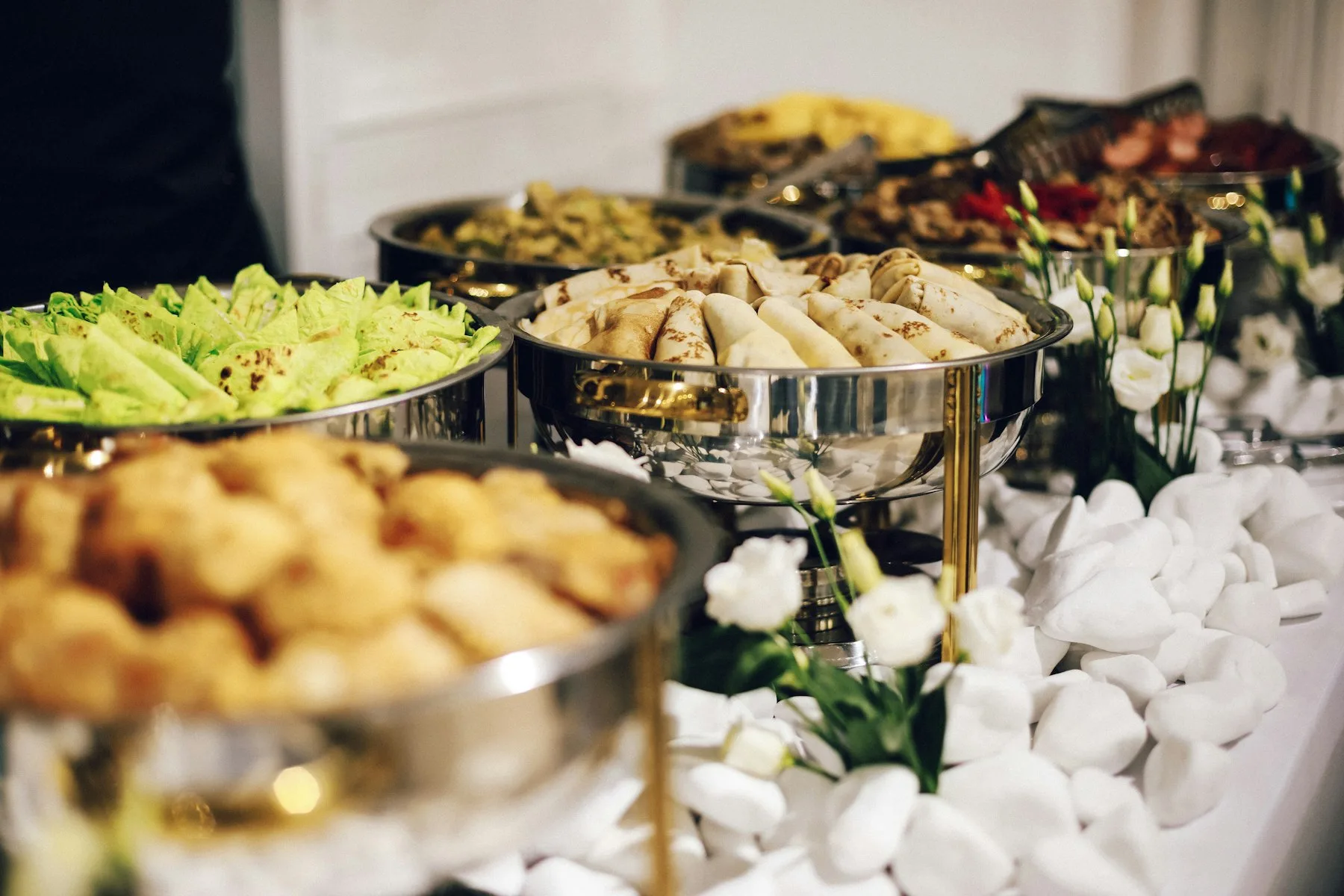
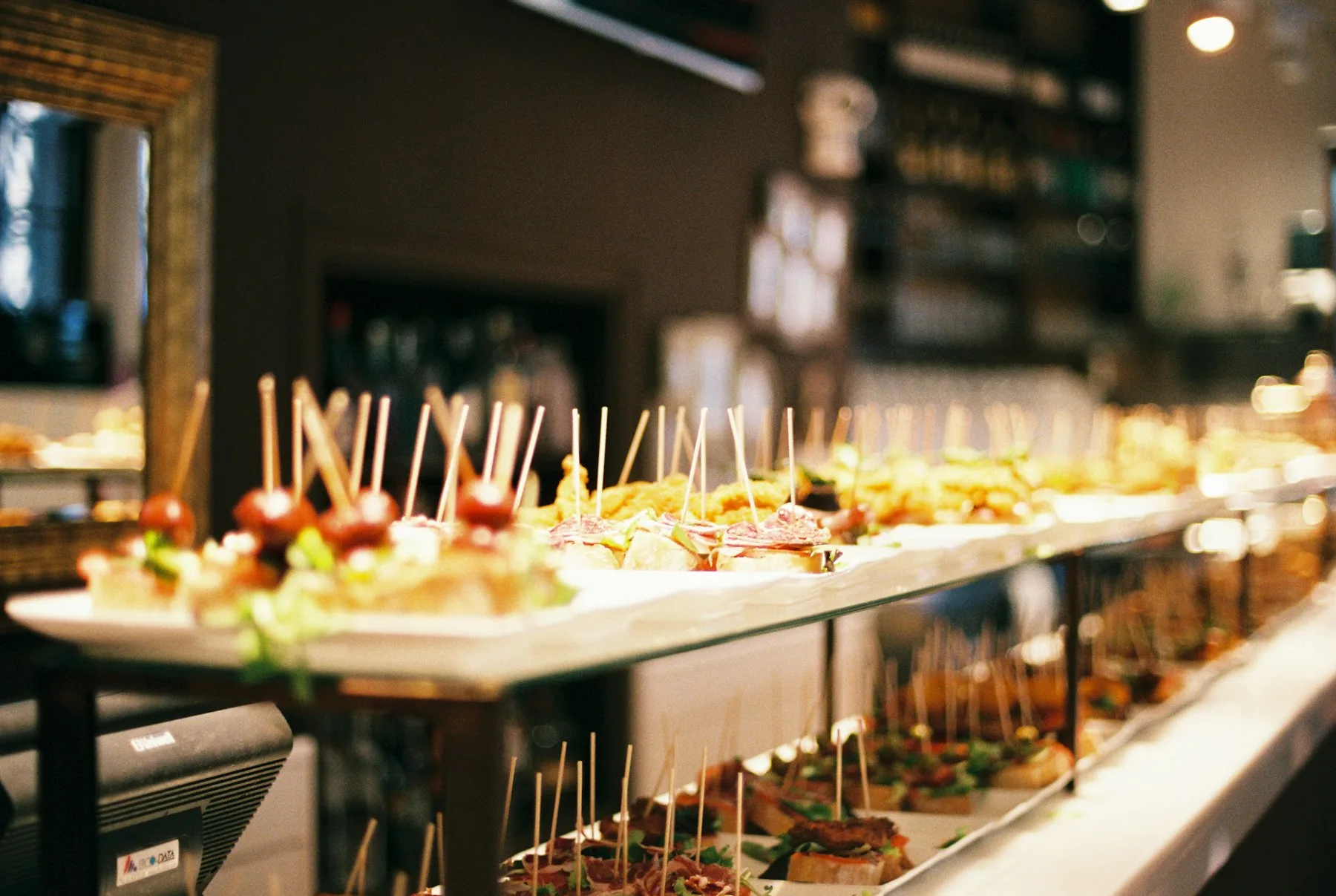
A buffet does not have that bottleneck: everything is laid out before people arrive. For a crew meal of 80 people between 7pm and 7:45pm, it is faster than a truck. Quantities are worked out as for any reception.
| Criterion | Food truck | Buffet |
|---|---|---|
| Who eats | Paying public, per item | Guests or crew, meal provided |
| Speed | 60 to 120 portions per hour per truck | Everyone served in 20 to 30 minutes |
| Power | Generator or mains hook-up, gas | Hot-holding cabinets, electricity |
| Permit | Public space permit if on a public road or square | The venue's own |
| Menu | Two or three dishes, repeated | Several dishes, dietary needs covered |
On public land: the occupation permit
A food truck parked on a square or an esplanade is occupying public land. French towns issue a temporary permit for this, under article L2122-1 of the French public property code (Code général de la propriété des personnes publiques). For events, many run a call for applications: the files published by the city of Marseille for its neighbourhood festivals are a good example. They state that the permit is temporary and can be withdrawn at any time, and require compliance with EU Regulation 852/2004 on food hygiene and the French order of 21 December 2009, with daily temperature checks.
The same files ask for a description of the cooking, preparation, cold storage and water areas, and for the business to be registered with the departmental food-safety authority (DDPP). A festival selecting its trucks can borrow these criteria.
Fire, once again
Many trucks cook on gas, with no visible open flame. Embers and wood-fired spits, however, fall under the Hérault prefecture's order of 25 April 2002: the use of fire is banned from 16 June to 30 September within 200 metres of woodland, garrigue (the local dry scrubland) and scrub. For a July festival in a pine wood, a wood-fired spit-roast lamb is ruled out. In May or October, the picture is different.
The calendar changes everything
In Montpellier, spring and autumn festivals fall outside the summer ban period. In 2026, FISE, the international urban and extreme sports festival, was held from 13 to 17 May, and Cinemed, the Mediterranean film festival, from 16 to 24 October at the Corum. An October festival also brings cooler evenings, when a hot dish sells better than a salad.
What the organiser provides
A truck or stall needs drinking water, grey-water disposal, electricity, bins with recycling and lighting after dark. Without a mains hook-up it runs on a generator, which is noisy next to an acoustic stage. A crew buffet asks for less: a table, a water point and a few sockets for the hot cabinets.
The site plan is therefore drawn up with the suppliers: trucks close to the utilities and away from quiet stages, the crew buffet near the dressing rooms.
The mixed approach
Most mid-sized festivals combine the two: two to four trucks for the public, and a caterer for crew meals, served as a buffet or in labelled boxes. The caterer can also run a paying stall with a short menu. The spit-roast menu lends itself to this: lamb or ribs carved to order sell well by the portion and can be seen from across the field.
Feeding artists, volunteers and the public is covered in detail in catering for a festival. For a festival in Montpellier or elsewhere in the Hérault, our festival catering page sets out the formats available, and you can send a request from the contact page.
Frequently asked questions
Food truck or buffet for a festival?
A food truck serves a paying public item by item, in a continuous flow; a buffet serves a known group at a set time. The choice depends on who pays, how many eat at once, and what the site allows. Often the two sit side by side.
How many portions does a food truck serve per hour?
Between 60 and 120, one every 30 seconds to a minute. When 1,500 people leave a concert at once, you need several trucks or food already prepared. A buffet for 80 people between 7pm and 7:45pm is faster.
What permit does a food truck need on public land?
A temporary public-space permit (article L2122-1), precarious and revocable, issued by the town, often through a call for applications. The truck meets EU Regulation 852/2004 and the order of 21 December 2009, with daily temperature checks.
What must the organiser provide for trucks and buffet?
A truck needs drinking water, grey-water disposal, electricity, bins with recycling and lighting; without a hook-up it runs on a generator, noisy near a stage. A crew buffet asks for less: a table, a water point and a few sockets.
Is a mixed approach possible?
Yes, and most mid-sized festivals use it: two to four trucks for the public, a caterer for crew meals as a buffet or boxes. The spit-roast menu suits this, lamb carved to order sells by the portion. See our festival catering.