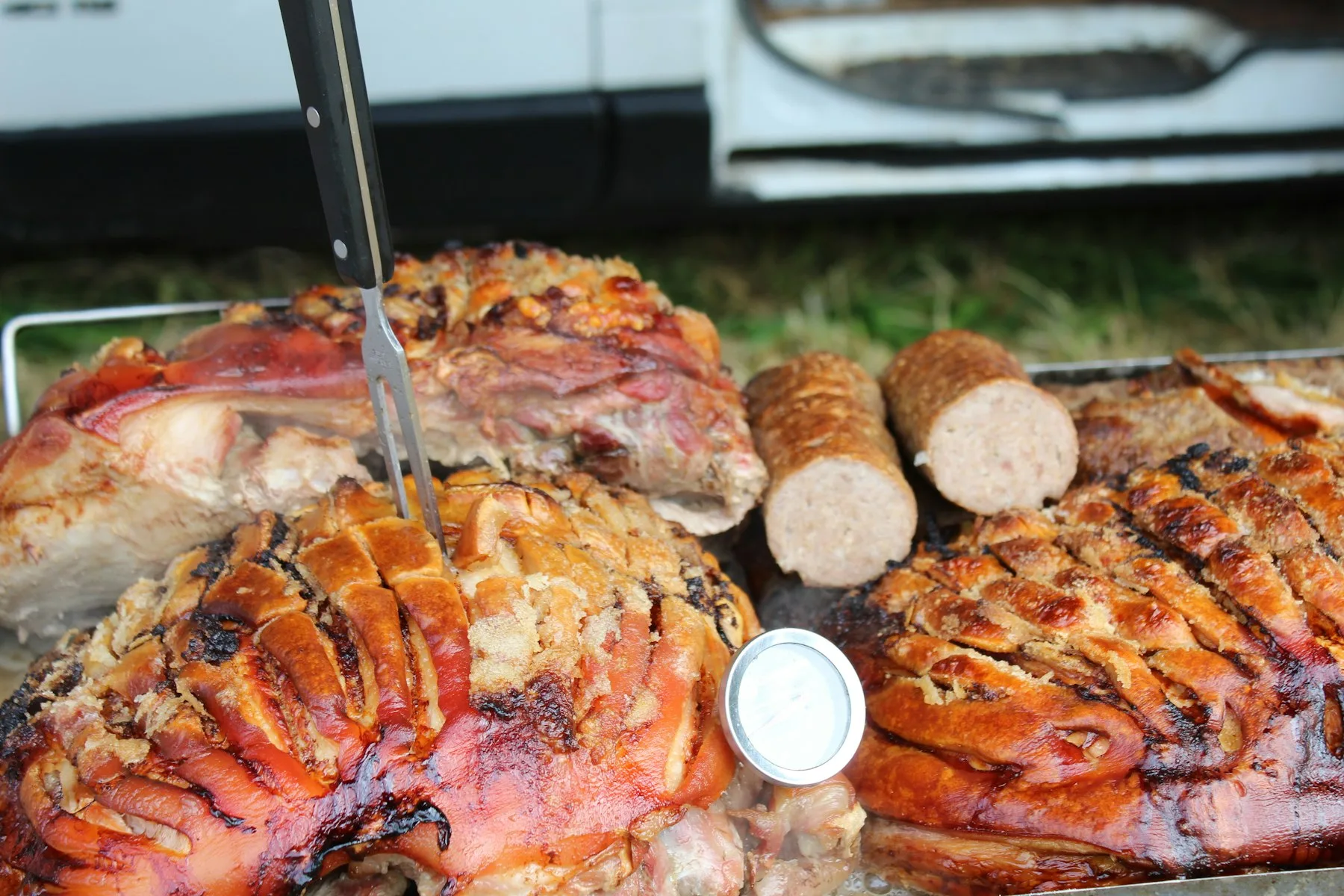
Yes — MC Traiteur cooks over fire in Montpellier: brasero, spit, plancha and a giant paella, for a wedding, a birthday, a company meal or a festival. Fire cooking asks for a little logistics — a clear pitch, water, sometimes a permit — but it is what gives these dishes their flavour and their pull on guests.
Brasero, spit, plancha and paella: what cooks what
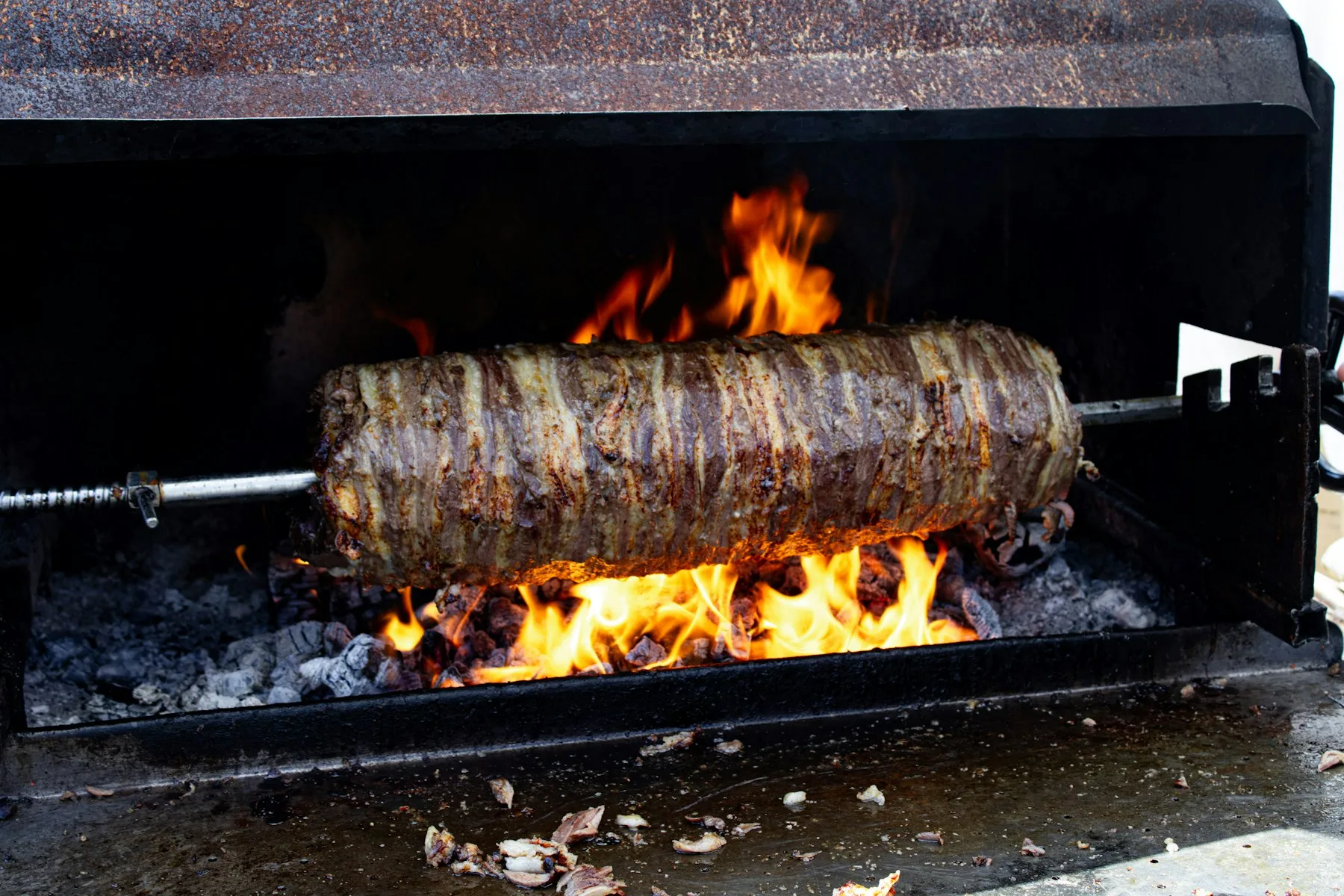
A brasero is an open hearth where embers heat a steel plate or grill; meat, fish and vegetables are seared on it in front of guests, in the smell of woodsmoke. A spit turns a whole piece — lamb, pork, poultry — above the embers for several hours, until the flesh is tender and the skin golden.
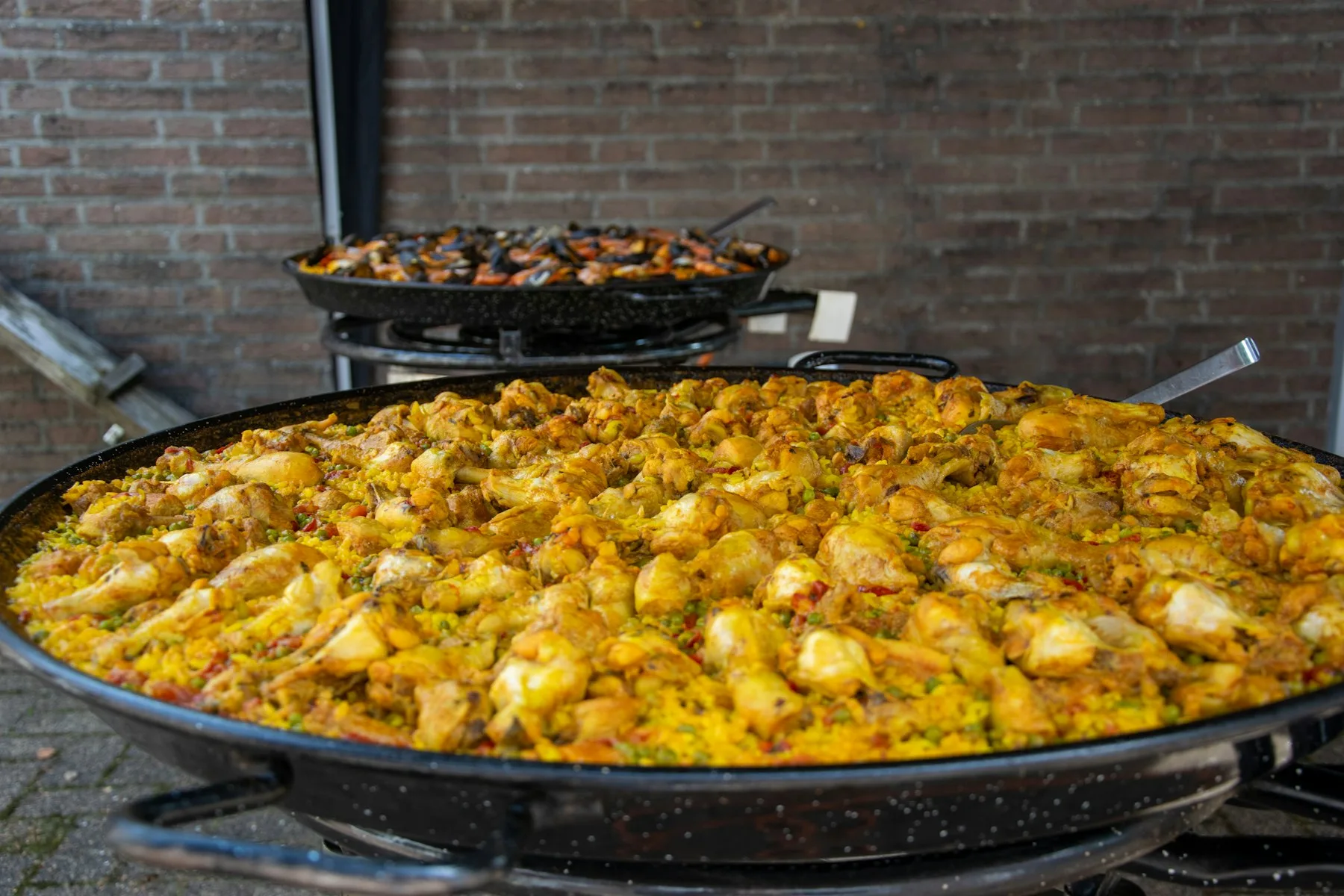
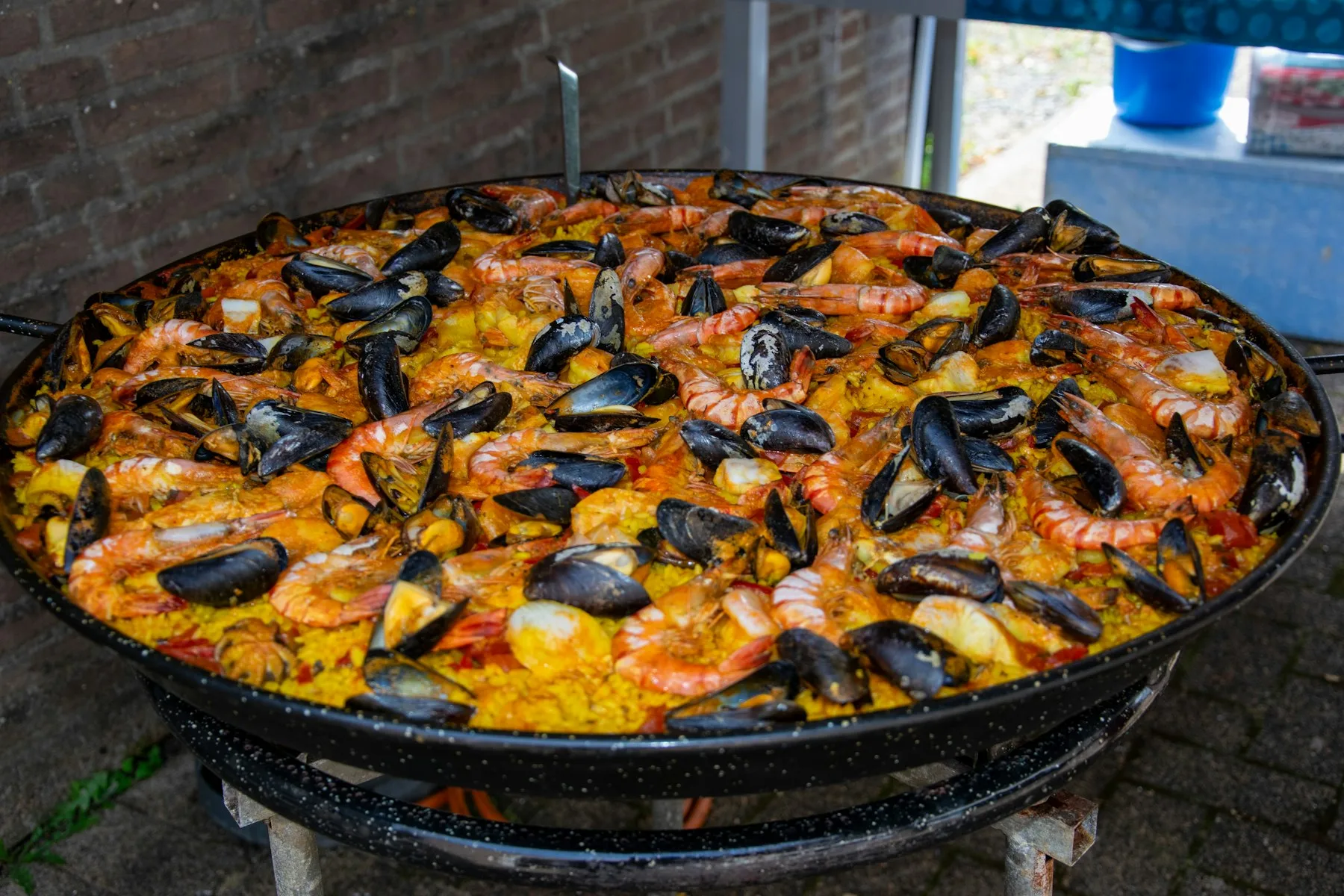
A plancha is a smooth, very hot plate that cooks fast and without flame: it suits prawns, squid, vegetables and small pieces served in a steady flow. A giant paella, lastly, is cooked in a wide pan set over a burner, rice and seafood stirred together in front of everyone. These four methods make up the Spit, plancha and brasero menu.
For which events
Fire cooking works anywhere you can set up a hearth outdoors and where the sight of the cooking is part of the celebration. A wedding at a wine estate, a birthday in the garden, an outdoor company meal, a village méchoui, a festival: the spit and the brasero hold a long table as well as a steady stream of service.
For a festival or a public event, the food truck "La box qui va tout fumer" carries this fire cooking in mobile form, with service at the counter. The formats available for an outdoor event are set out on the festival catering page.
Logistics: pitch, water, safety
Fire cooking calls for a clear pitch, ideally on a stable, non-flammable surface, away from tents, dry hedges and the path of children. You need water nearby, a way to put out a flare-up quickly, and enough room for the spit or brasero plus the work surface.
- A clear, stable, non-flammable pitch, away from tents and dry hedges.
- Water nearby and a means to put out a flare-up.
- Room around the hearth for the cooking and the work surface.
- The venue's agreement, and a council permit on public land.
On private ground, the owner's or venue's agreement is usually enough. On public land — a square, an esplanade — the set-up occupies public space and needs a temporary permit from the council. Food hygiene rules apply in every case: the cold chain, cooking temperatures, traceability.
Wood fire and the closed season
In the Hérault, outdoor fire is regulated. The prefectural order of 25 April 2002 bans fire from 16 June to 30 September within 200 metres of woods, forests, garrigue and maquis. A wood-fired spit méchoui is therefore ruled out in high summer near the scrubland; in May, in October, or in town away from the hills, the question is different.
A gas plancha and a brasero with no open flame often fall outside this constraint, but it is the pitch that decides. We check this beforehand, by place and date, to suggest the cooking method that fits.
How much to plan per guest
A spit-roasted piece loses weight as it cooks and carries bone: you have to start from the cooked, boned weight actually eaten, not the raw weight. The benchmarks below are per adult, for a single main course, to be adjusted for appetite, sides and the length of the meal. They are indicative and not contractual.
| Cooking | Benchmark per adult | Note |
|---|---|---|
| Spit roast (lamb, pork) | 250 to 350 g cooked, boned | Weight actually eaten, bone aside |
| Brasero grill (beef, poultry) | 180 to 250 g | For a single main course |
| Plancha (prawns, squid, vegetables) | 150 to 250 g | Served in a steady flow |
| Paella | 250 to 300 g plated paella | Rice and seafood together |
| Sides | 150 to 200 g | One or two sides |
The detail of cooking, timing and quantities for a méchoui of 50 to 150 people is set out in a dedicated article. For a paella, plan generously on the rice and seafood, which go fast.
For a wedding, a méchoui or a company meal in Montpellier and across the Hérault, the Spit, plancha and brasero menu is set against the guest count, the venue and the date. Requests go through the contact page, where we go over the pitch, access and the cooking method that is possible.
Frequently asked questions
Can you do a wood-fired méchoui in summer in the Hérault?
Not everywhere. The prefectural order of 25 April 2002 bans fire from 16 June to 30 September within 200 metres of woods, garrigue and maquis. In town or away from the hills, and outside that period, it is possible; we check the pitch and the date before confirming.
Do you need a permit to set up a brasero?
On private ground, the venue's or owner's agreement is usually enough. On public land, the set-up occupies public space and needs a temporary permit from the council. In every case, hygiene and fire-safety rules apply.
How much meat per person on the spit?
A trade benchmark sits between 250 and 350 g of cooked, boned meat per adult, for a single main course. You have to think in weight actually eaten, because a spit-roasted piece loses weight and carries bone. The amount is adjusted for the sides and the length of the meal.
Is the cooking done in front of guests?
Yes, that is the point of it. The brasero, the spit and the paella are cooked on site, in full view, in the smell of the fire. It calls for a clear pitch, water nearby and the room needed around the hearth.